
2026 Top Used Golf Clubs for Sale Best Deals?

Finding the 2026 Top Used Golf Clubs for Sale Best Deals requires more than chasing the lowest listed price. A clean photograph can hide worn grooves, a bent shaft, or a replaced grip. The strongest bargains combine condition, correct specifications, and a trustworthy seller. That balance matters more than a famous brand stamped on the sole.

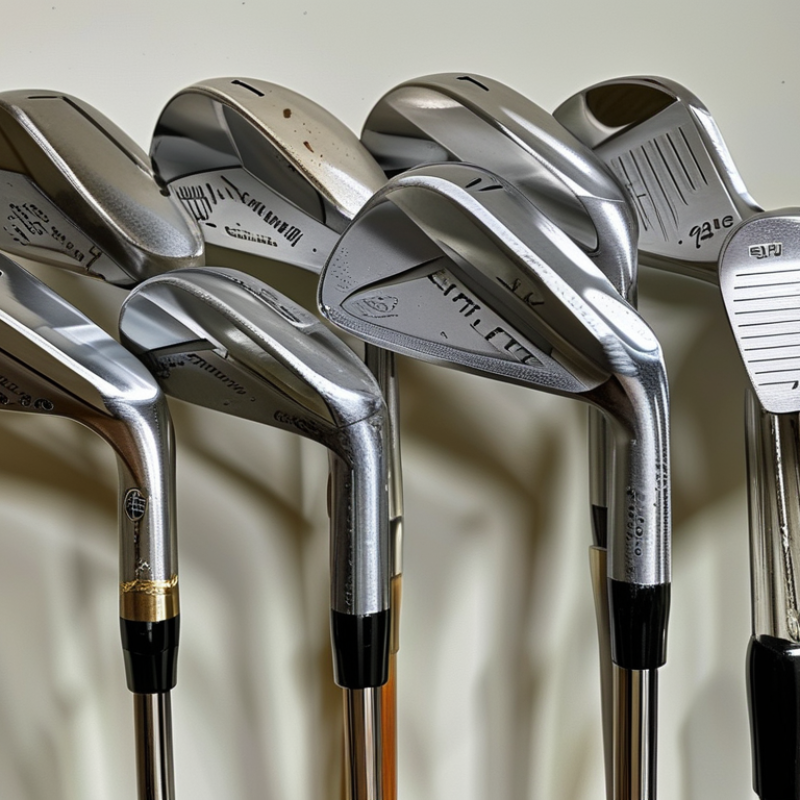
Tom Wishon, a veteran golf-club designer and club-fitting authority, has repeatedly stressed, “There is no such thing as a standard golf club.” His point remains practical. A used 7-iron with the wrong shaft can feel heavy, launch poorly, and weaken confidence. Meanwhile, an older model with suitable length, loft, lie, and flex may perform far better. Buyers should inspect groove edges, ferrules, shaft labels, grip wear, and any dents near the clubface. Small details reveal big costs.

Real experience also teaches caution. I have seen attractive listings become disappointing purchases after shipping, regripping, and loft adjustments. Not every bargain stays cheap. Some listings lack clear photos or honest measurements. That does not always mean fraud, but it deserves questions. Ask for serial numbers, exact club specifications, return terms, and close-up images before paying. A short trial period is valuable.

This guide compares popular 2026 options across irons, drivers, wedges, and complete sets. It considers playability, durability, resale value, and fitting needs. The goal is not to crown one universal winner. Golfers have different swings, budgets, and expectations. Sometimes, the perfect deal is simply the club that feels predictable on the first clean strike.
2026 Top Used Golf Clubs for Sale Best Deals?

What Makes a Used Golf Club a Smart Buy in 2026

A used golf club can be a smart buy in 2026 because performance often survives longer than marketing cycles. The National Golf Foundation reported 28.1 million on-course golfers in the United States during 2023. That large player base creates steady resale supply and more price competition. The R&A’s Golf Around the World 2024 report counted 66.6 million golfers globally. More players also mean more secondhand equipment entering the market.

Condition matters more than a low sticker price. I check the clubface for deep grooves, inspect the shaft under bright light, and measure grip wear with my thumb. A slightly worn grip is inexpensive to replace. A bent shaft is not. Golf Datatech retail tracking consistently shows that equipment prices vary by model age, condition, and category, so comparing several listings is sensible. Ask for the club’s loft, length, shaft flex, and adjustment history. Photos should show the sole, face, hosel, and grip.

Small details matter.

A launch monitor session can expose a poor fit before purchase. I once chose a cheaper club with the wrong shaft and lost consistency for weeks. That mistake still influences my buying process. Independent fitting advice, clear return terms, and verified measurements support a more reliable decision. Used equipment is not automatically a bargain. It becomes smart value when its condition, specifications, and price match your actual swing.

Top Used Golf Club Types for Different Player Needs

Used golf clubs can serve very different player needs. The National Golf Foundation reported 45 million Americans played on-course golf in 2023. The R&A’s 2024 Golf Participation Report recorded about 67 million golfers across affiliated markets outside the United States and Mexico. That broad player base needs more than one club design.

Beginners often benefit from cavity-back irons with wider soles. They help retain speed on low-face strikes. High-handicap players may prefer hybrids instead of long irons. Hybrids launch higher and glide through thick grass. Players with moderate consistency can consider compact cavity backs. They offer useful forgiveness without looking oversized. Blades look precise, but they punish small contact errors.

For fairway shots, a higher-lofted fairway wood can help slower swingers. Stronger players may choose lower-lofted options for controlled distance. A mallet putter can support alignment, while a compact blade may suit an arcing stroke. On a fitting bench, check loft, lie, shaft flex, and grip condition. A worn grip can make a sound club feel unstable. Inspect the face for deep marks and the shaft for dents. A clean crown proves little. I once underestimated grip wear. That was a poor assumption. Personal testing still matters more than a perfect online description.

How to Compare Prices and Identify the Best Deals

When comparing used golf clubs, start with the exact specification, not the photograph. Record the model year, loft, shaft flex, length, grip condition, and included headcover. Then check at least five recent listings with identical specifications. Calculate the real cost: listing price, delivery, taxes, and possible grip replacement. A club priced 180 dollars may become 220 dollars after repairs. That is not always a bargain.

The 2024 National Golf Foundation Golf Participation Report recorded 26.6 million U.S. on-course golfers in 2023. The R&A’s Golf Around the World 2024 report counted about 66.6 million golfers worldwide. Strong participation can support active resale markets, but it does not guarantee fair pricing. Compare the median price, not the cheapest advertisement. My practical threshold is usually 15 to 20 percent below comparable listings, provided the seller offers clear photos and a return window. Check the face for deep wear, the shaft for dents, and the hosel for cracks. Ask for close-up images. Small details matter.

I still get this wrong sometimes. A low price can hide an uncommon shaft or expensive replacement grip. Older clubs may perform well, yet their resale value can fall sharply after cosmetic damage. Industry participation reports provide useful market context, while completed-sale records provide better price evidence. Never treat an asking price as proof of value. When data conflicts, I would rather wait than force a weak deal.

2026 Top Used Golf Clubs for Sale Best Deals? — How to Compare Prices and Identify the Best Deals
Club Category Typical Quantity Good Used Condition Typical New Price Range
(USD)
Typical Used Price Range
(USD)
Estimated Saving Strong Deal Benchmark What to Inspect Before Buying
Driver 1 club Light cosmetic wear; no crown cracks; face grooves and sole remain structurally sound $250–$600 $80–$180 45%–75% Usually attractive at $120 or less when the shaft and head are undamaged Check the crown, face, hosel, shaft tip, grip condition, and whether the loft setting works correctly
Fairway Wood 1–2 clubs Minor sole marks and normal face wear; no dents or loose components $180–$350 $60–$140 40%–70% Prices below $90 are competitive if the club has a suitable loft and a straight shaft Look for face dents, deep sole damage, shaft cracks, ferrule movement, and excessive grip wear
Hybrid 1–3 clubs Normal sole scratches; clean face; no visible structural damage $130–$280 $45–$110 40%–70% A sound hybrid around $70–$85 is generally a strong value for replacing a difficult long iron Confirm loft, shaft flex, face condition, lie angle, and that any adjustable sleeve is not seized
Iron Set 6–8 clubs Moderate face wear; grooves still defined; no bent heads or badly worn shafts $600–$1,400 $180–$550 35%–75% Six- or seven-club sets below $350 can be excellent when the specifications match the player Verify the exact club count, shaft flex, grip condition, loft progression, lie consistency, and groove depth
Gap Wedge 1 club Light face wear with usable grooves; no severe leading-edge damage $120–$220 $35–$100 35%–70% Consider $50–$70 a good target when the grooves remain sharp and the loft is suitable Inspect grooves, leading edge, sole grind, shaft rust, and whether the club has been bent repeatedly
Sand Wedge 1 club Some sole wear is acceptable; grooves should still provide visible texture $120–$220 $35–$100 35%–70% Below $65 is usually worthwhile only if the face and grooves are not excessively polished Check bounce, sole wear, groove sharpness, face flatness, and the condition of the grip and shaft
Putter 1 club Cosmetic marks are acceptable; face should be flat and the shaft should be firmly secured $150–$450 $50–$220 30%–70% A well-aligned putter between $75 and $130 can offer strong value if it fits the golfer’s setup Check face damage, alignment features, head movement, shaft bends, grip size, and included headcover
Complete Club Set 10–14 clubs Consistent wear across the set; no broken shafts; bag and headcovers may show normal use $700–$1,800 $250–$900 35%–70% Compare the cost per usable club; a complete set under $500 can be compelling for a beginner Count every club, confirm shaft flex, inspect all grips, check bag zippers, and test for loose heads
Single Replacement Iron 1 club Should closely match the existing set in model specifications, shaft, length, and wear $80–$220 $25–$90 35%–70% Buy only when the replacement matches the existing set; a lower price is not useful if specifications differ Confirm club number, loft, shaft length, shaft flex, lie angle, grip size, and serial or identification markings
Price ranges are typical U.S. used-market estimates for clubs in playable condition. Actual prices vary by age, specifications, condition, shaft type, included accessories, seller fees, shipping, and local demand. Compare the total delivered cost rather than the listing price alone.

Essential Checks for Club Condition and Performance

2026 Top Used Golf Clubs for Sale: Best Deals?

Buying used golf clubs can save money, but condition matters more than a bright finish. I inspect each club under strong daylight before paying. Check the clubface for worn grooves, deep scratches, dents, or cracks near the hosel. Grooves should still create visible edges, not appear flat and polished. A shiny head can mislead you.

The shaft needs equal attention. Roll it gently on a flat surface and look for bends or unusual movement. Inspect graphite for cracks, especially near the head and grip. Steel shafts may show surface rust, but deep corrosion deserves caution. Test the grip by twisting it firmly. Loose grips can affect control and confidence. Ask about previous repairs, storage conditions, and the club’s playing history.

Tips: Bring a small flashlight and a clean towel. Compare the listed specifications with the actual club. Swing it if possible, even slowly. Listen for rattling sounds. Check whether the lie, loft, and shaft length suit your swing. A professional fitting can reveal hidden problems, although it adds cost. I once chose a cheaper club with worn grooves and regretted it after several rounds. Performance declined quickly. That mistake still influences my inspections. Used equipment is rarely perfect, so leave room for replacement grips or adjustments.

2026 Top Used Golf Clubs for Sale: Essential Condition & Performance Checks

This inspection scorecard ranks the most important checks when comparing used golf clubs. The 100-point model prioritizes structural safety, playable performance, and value protection.

Higher-weight checks should receive more attention during an in-person inspection. Confirm specifications, inspect for damage, and test performance before purchasing.

Where to Find Reliable Used Golf Clubs for Sale

Reliable used golf clubs are easier to find when the seller shows evidence, not enthusiasm.

The National Golf Foundation reported about 45 million American on-course golfers in 2023. That large player base creates steady secondary-market supply. Look at established pro shops, certified resale platforms, and local fitting studios with written return policies. Avoid listings with only one dark photograph.

The National Golf Foundation reported about 45 million American on-course golfers in 2023.

A trustworthy seller should disclose club age, shaft flex, grip wear, loft, lie angle, and previous repairs. Ask for clear images of the face, sole, crown, and hosel. A few scratches are normal. Hidden dents are not. Independent fitting shops can measure loft and lie before shipping, which matters because small angle changes can alter launch and direction. Golf Datatech’s equipment retail tracking also shows why comparing used and new prices requires care; discounts vary by model age, condition, and demand.

I once chose a cheaper set without checking shaft length. It felt wrong after two rounds. That was my mistake. Check the serial marking, but do not treat it as proof of condition.

Request a receipt, inspection notes, and a return window. The USGA’s equipment rules can help confirm whether older clubs remain suitable for regular play, although recreational golfers may not need tournament-level compliance. Reliable deals usually look boring: accurate descriptions, reasonable photos, measurable specifications, and a seller willing to answer difficult questions.