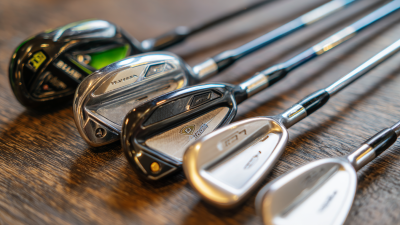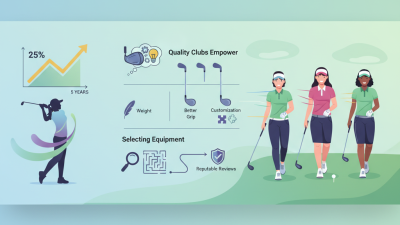

Choosing the 2026 best golf wedges for wholesale buyers requires more than comparing polished product photos. Buyers must examine loft gaps, sole shapes, bounce options, groove consistency, finishes, packaging, and landed cost. A wedge that performs beautifully in a launch monitor may still create problems at retail. Its head weight may vary. Its finish may show scratches after limited handling.
Dave Pelz, a respected short-game instructor and golf equipment authority, said, “The short game is where the majority of shots are lost.” This principle remains useful for wholesale decisions. Golfers need predictable contact from tight fairways, rough, bunkers, and wet turf. Retailers need products that support those expectations across different skill levels. During supplier evaluation, practical testing should include full swings, open-face shots, bunker shots, and partial distances. Simple details matter. Check the leading edge. Measure the stated loft. Inspect every groove.
This guide will assess golf wedges through a wholesale lens. It will consider performance, durability, customization, minimum order quantities, delivery reliability, and after-sales support. It will also compare traditional designs with forgiving cavity-back and game-improvement options. No shortlist is perfect. A low unit price can hide higher returns, inconsistent quality, or weak brand appeal. I may favor dependable specifications over impressive marketing claims, because buyers carry the final risk. Still, preferences differ by region and customer group. The strongest choice is not always the most advanced wedge. It is the one that performs consistently, arrives reliably, and gives retailers a clear reason to stock it.
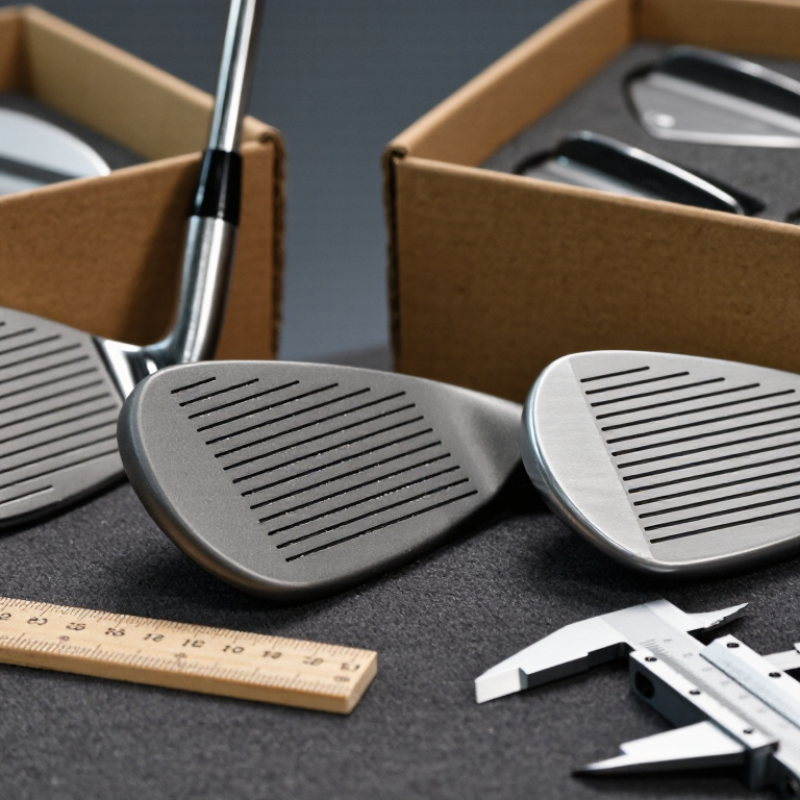
For wholesale buyers, a golf wedge begins with loft, bounce, and sole design. Common lofts range from 46° to 64°, while gap wedges often sit between 48° and 52°. Sand wedges usually feature 54° to 58° loft and moderate or high bounce. Bounce helps the sole move through soft turf and sand. Low bounce can suit firm conditions, but it punishes steep swings. A lower loft is not automatically longer.
The USGA and R&A Equipment Rules specify limits for grooves, groove edges, and club dimensions. Buyers should request current conformity documentation before placing large orders. Shaft material, flex, lie angle, swing weight, and grip size also affect fitting consistency. Small tolerances matter. A two-degree loft variation can change gapping across a retail set. The National Golf Foundation reported 28.6 million U.S. on-course golfers in 2023, showing a broad customer base with varied skill levels. One wedge profile cannot serve everyone.
Tips: Ask suppliers for measured samples, not only catalog figures. Check loft, lie, bounce, head weight, and groove condition across several units. Test them from tight turf, rough, and sand. Record launch, spin, carry, and stopping distance. Golf Datatech’s retail tracking reports show that equipment demand changes by category and season, so inventory should match local playing conditions. I would also keep a small mixed-lot order first. It costs more per unit, perhaps, but it exposes quality gaps before a full purchase.
For wholesale buyers planning 2026 golf wedge ranges, design should be assessed beyond polished photos. During fitting sessions, I compare sole width, leading-edge shape, center of gravity, and face texture. A clean sole can move through firm turf. A fuller sole may protect less-skilled players from digging. That trade-off matters in a mixed retail order.
Loft controls distance gaps, but stamped numbers are not enough. I measure carry distances with consistent balls and swing speeds. A 50-degree wedge often bridges a pitching wedge and 54-degree model, yet player sets vary widely. Four to six degrees between lofts is a useful starting point. Check actual loft and lie, because production tolerances can alter gapping. Small errors become customer complaints. Measure the samples.
Bounce describes the sole’s resistance to digging. Higher bounce suits steep swings and soft sand. Lower bounce can help shallow swings on tight lies, but it demands cleaner contact. Grind changes how that bounce behaves near the heel and toe. Heel relief can open the face without raising the leading edge too much. For wholesale evaluation, request samples with different grinds and test them on wet, firm, and fluffy turf. My early buying sheets favored maximum versatility. That was too simple. A wedge that fits everyone may fit no one perfectly. Record turf notes, strike patterns, and return reasons before expanding quantities.
Wholesale buyers should segment wedge inventory by player need, not only loft. The R&A’s 2023 Global Golf Participation Report counted 66.6 million on-course golfers across 206 countries. That broad market includes beginners, improving players, and skilled golfers with very different short-game demands.
Game-improvement cavity wedges suit beginners who need higher launch and more forgiveness on mishits. Stock common gap and sand lofts first. The U.S. National Golf Foundation reported 28.1 million American on-course golfers in 2023, supporting steady demand for practical, easy-to-fit models. High-bounce sand wedges help players with soft swings or bunker shots. They also perform better in loose turf. Low-bounce lob wedges fit firm ground and shallow delivery angles, but they require better contact. Do not overstock them blindly.
Better players often seek compact, precise wedges with multiple sole shapes. A gap wedge can reduce distance gaps between pitching and sand wedges. Retailers should compare loft spacing, sole width, bounce, shaft weight, and grip size. The USGA Equipment Rules confirm that groove design and club dimensions remain regulated performance factors. Still, stock testing is essential. A wedge that looks premium may feel harsh or launch unpredictably. That mistake happens. Trial several swing profiles, record carry distances, and review returns by player type. Wholesale assortments should include left-handed options, durable finishes, and clear loft markings for fitting accuracy.
| Wedge Category | Typical Loft | Typical Bounce | Recommended Sole Design | Primary Player Need | Typical Construction | Common Playing Conditions | Key Wholesale Assortment Benefit |
|---|---|---|---|---|---|---|---|
| Gap Wedge | 48°–52° | 8°–12° | Medium-width sole with moderate trailing-edge relief | Filling the distance gap between a pitching wedge and a sand wedge | Cast or forged carbon steel; steel shaft or graphite option | Fairway, light rough and standard turf | High-volume transition club for complete wedge sets and mixed-loft assortments |
| Sand Wedge | 54°–58° | 10°–14° | Wide sole with a rounded or trailing-edge-relieved profile | Bunker shots, higher launch and controlled approach shots | Stainless steel or carbon-steel head with durable face scoring lines | Soft sand, normal turf and moderate rough | Core category with broad appeal across beginner, recreational and improving players |
| Lob Wedge | 58°–64° | 4°–10° | Narrow-to-medium sole with heel and trailing-edge relief | High-loft shots, short-sided pitches and shots requiring a quick stop | Forged or cast steel head; compact profile is common | Firm turf, tight lies and fast greens | Premium-looking specialty option that expands the short-game range |
| High-Bounce Wedge | 54°–60° | 12°–16° | Wide sole with a prominent leading-edge-to-sole transition | Reducing digging for steep-angle swings and soft-ground play | Cast or forged steel with a durable sole finish | Soft fairways, wet turf, fluffy rough and soft sand | Useful fit-specific option for players who need forgiveness rather than maximum versatility |
| Low-Bounce Wedge | 58°–62° | 4°–8° | Narrow sole with increased leading-edge, heel or trailing-edge relief | Clean contact from tight lies and shallow-angle swings | Forged or cast steel head; compact shaping is frequently preferred | Firm turf, hard sand and closely mown lies | Complements high-bounce inventory and supports condition-based fitting |
| Game-Improvement Wedge | 50°–60° | 10°–14° | Wide, stable sole with a forgiving perimeter profile | Improved stability, consistent launch and easier results on mishits | Cast stainless steel or other durable steel construction | Mixed turf conditions and general recreational play | Strong entry-level and mid-market category with broad retail compatibility |
| Players' Compact Wedge | 46°–60° | 6°–12° | Moderate sole width with carefully shaped relief for shot-making | Trajectory control, face manipulation and precise distance management | Forged carbon steel or compact cast-steel head | Prepared fairways, firm lies and varied course conditions | Higher-specification option for experienced players and specialty golf retailers |
| Full-Face Wedge | 56°–64° | 8°–12° | Moderate sole with grooves extending across more of the face | Maintaining spin potential when impact occurs toward the toe or with an open face | Cast or forged steel head with full-face scoring-line design | Rough, open-face shots and short-game situations requiring face rotation | Differentiated specialty product for buyers seeking visible technical features |
| Approach / Utility Wedge | 46°–52° | 6°–10° | Blended sole designed to transition smoothly from iron-style turf interaction | Consistent full-swing distance control and reliable approach play | Cast stainless steel or hollow-body-compatible steel construction | Fairway and light rough | Easy to pair with modern iron sets and useful for organized set merchandising |
Specifications shown are common industry ranges rather than fixed standards. Actual launch, spin and turf interaction depend on loft, sole geometry, shaft, swing delivery, ball and course conditions. Wholesale buyers should verify conformity with the current applicable rules before listing or distributing products for regulated competition.
For 2026 wholesale wedge sourcing, buyer demand should guide the specification.
The National Golf Foundation reported about 45 million U.S. on-course golfers in 2023. The R&A’s Golf Around the World report counted 66.6 million adult golfers across 206 countries.
These figures support broad demand, but they do not guarantee fast stock turnover.
Loft combinations, right- and left-hand options, finish durability, and packaging should match each target market.
Quality control must begin before production.
Request material certificates, groove measurements, loft and lie records, and sample approval documents.
Check three samples from every production batch, not only the best sample.
A practical inspection should measure face flatness, shaft alignment, grip installation, and cosmetic consistency.
USGA equipment rules also provide a useful compliance reference for grooves and club dimensions.
Small defects matter. A two-degree loft variation can change distance gaps and confuse fitting decisions.
That risk deserves written tolerance limits.
Supplier evaluation needs evidence, not attractive photographs.
Review factory capacity, inspection staffing, corrective-action records, and delivery history.
The 2024 McKinsey sporting-goods outlook noted continued pressure on costs, inventory, and supply-chain resilience.
Ask suppliers how they handle rejected components and delayed materials. Their answer often reveals more than a sales presentation.
A pilot order is safer than a large commitment. Still, pilot results can mislead when inspection is too small.
Buyers should repeat testing and document failures honestly.
Perfect-looking paperwork is not proof of perfect wedges.
Wholesale wedge planning for 2026 should begin with demand signals, not catalog size. The R&A’s Global Golf Participation Report 2023 recorded 66.6 million on-course golfers across reporting markets. The National Golf Foundation also reported 47.2 million U.S. on-course golfers in 2023. These figures support steady category demand, but they do not guarantee equal demand for every loft or finish. Practical buying still matters. A 50° pitching-gap wedge, 54° sand wedge, and 58° lob wedge often create a clearer retail range than excessive variations.
Pricing needs a landed-cost view. Steel head costs, shaft options, CNC machining, groove compliance testing, packaging, freight, duties, and currency movement can change the final margin. Golf Datatech’s retail tracking shows that golf equipment demand remains sensitive to price and promotion. Therefore, buyers should compare wholesale cost against realistic sell-through, not suggested retail price alone. A small price difference can become significant across 500 units.
Inventory planning should use rolling forecasts. Hold deeper stock in core lofts, while testing limited quantities of unusual grinds or finishes. The model will not be perfect. A missed weather season, delayed shipment, or sudden fitting trend can disrupt assumptions. Keep reorder points visible, separate fast and slow movers, and review sales every four weeks. My cautious preference is a smaller initial order with reliable replenishment. It may sacrifice a little volume discount, but it reduces dead stock and protects cash flow.