
2026 Top Golf Launch Monitor Types for Global Buyers

Choosing the right golf launch monitor in 2026 requires more than comparing prices and advertised metrics. Global buyers face different playing environments, budgets, support standards, and import requirements. A compact photometric model may suit an indoor practice room, while a radar-based unit can perform better on an open driving range. Hybrid systems offer broader tracking, but they often cost more and require careful setup.

Accuracy matters.

This guide examines the main golf launch monitor types available to international buyers, including camera-based, radar-based, hybrid, portable, and simulator-focused systems. It considers measured data such as ball speed, launch angle, spin rate, carry distance, and club path. It also reviews practical details, including lighting conditions, device calibration, software subscriptions, battery life, language support, warranty coverage, and regional service access.

Real-world use can reveal weaknesses that product pages overlook. A monitor may produce impressive numbers indoors but struggle under bright sunlight. Another may offer advanced club data, yet require a high-end computer and stable network connection. These limitations deserve honest attention. No single device fits every golfer, facility, or market. The most reliable choice depends on how, where, and how often the monitor will be used.

With guidance based on technical specifications, user experience, and credible product evaluation, this overview helps buyers compare options more carefully. It does not treat every published claim as fact. Instead, it encourages golfers, coaches, retailers, and simulator operators to verify performance before making a costly international purchase.
2026 Top Golf Launch Monitor Types for Global Buyers

What Is a Golf Launch Monitor and How Does It Work?

2026 Top Golf Launch Monitor Types for Global Buyers

What Is a Golf Launch Monitor and How Does It Work?

A golf launch monitor measures what happens immediately after impact. It tracks club speed, ball speed, launch angle, spin rate, carry distance, and direction. Most systems use Doppler radar, high-speed cameras, or both. Radar follows movement through space. Cameras capture the clubface and ball during impact. Software then converts these signals into readable numbers.

The R&A’s Global Golf Participation Report has recorded more than 60 million on-course golfers worldwide. The 2024 National Golf Foundation report also counted about 45 million American golfers across on-course and off-course activities in 2023. These figures help explain growing demand for measurable practice. However, accuracy depends on lighting, alignment, ball quality, and calibration. A number can look precise and still mislead you. That is the uncomfortable part.

Tips: Choose radar for outdoor range practice and wider ball flight tracking. Choose camera-based systems for indoor spaces and detailed impact analysis. Check whether the unit measures spin directly or estimates it. Place the monitor level with the target line, then verify distances using several shots. Do not judge your swing from one perfect strike. Ten shots reveal more, although even that sample can be imperfect. A practical buyer should compare independent test data, measurement tolerances, and local support before purchasing.

Which Golf Launch Monitor Types Will Be Available in 2026?

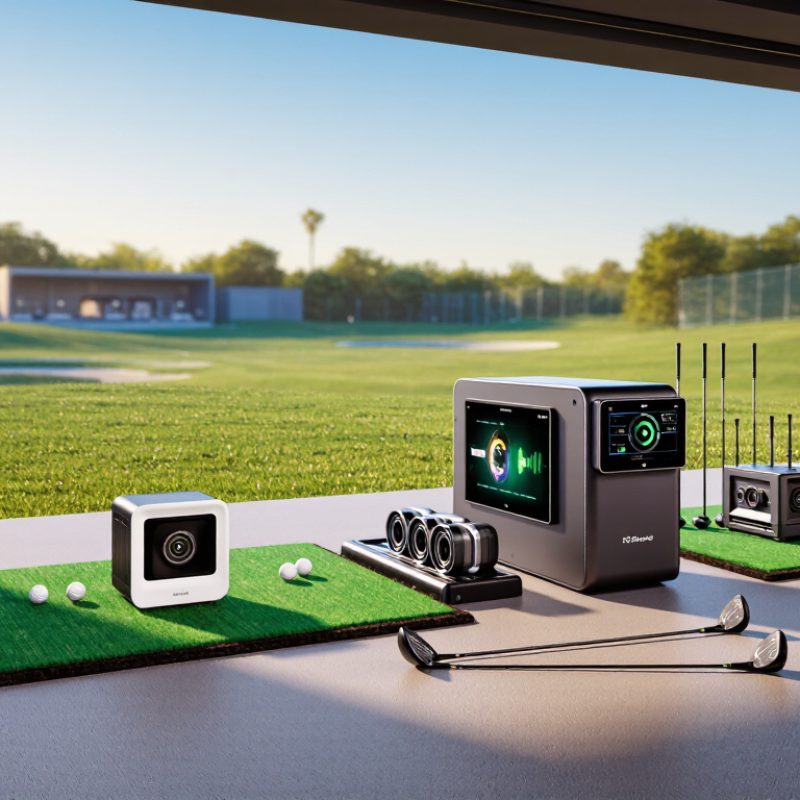
In 2026, golf launch monitors will likely be available in several practical formats. Camera-based systems will track club movement and ball flight through high-speed imaging. They can show impact position, launch angle, spin, and face direction. Radar-based monitors will measure ball speed, carry distance, and shot trajectory from a short distance. These systems may suit outdoor practice because they follow the ball after impact. Calibration remains critical.

Portable optical monitors will target golfers who practice in garages, small studios, or shared training spaces. They often use compact cameras and software to estimate shot data. Indoor simulator systems will combine launch monitoring with large displays, virtual courses, and club-fitting tools. Some 2026 models may support wireless connections, automatic shot storage, and multiple user profiles. Convenience improves quickly.

Accuracy still depends on lighting, alignment, ball quality, and installation height. A reflective indoor space can confuse camera sensors. Radar units may need enough ball flight distance. Buyers should compare measured data with a trusted fitting session before making decisions. I have found that cheaper systems can be useful for practice, but not every number deserves equal confidence. Cost does not always predict reliability. Real-world testing matters. Clear software matters too. Global buyers should also check local power standards, language support, data policies, and service availability before ordering.

How Do Radar, Camera, and Hybrid Launch Monitors Differ?

For global golf buyers in 2026, launch monitor choice should begin with measurement conditions, not feature lists. Radar units track ball and club movement through radio signals. They usually need clear space beyond the ball, especially indoors. A short room can distort readings when the ball reaches a net quickly. Outdoors, radar often follows ball flight farther. Wind and uneven ground still complicate testing. A practical fitting lesson is simple: placement matters as much as the sensor. Small alignment errors can produce large club-path differences.

Camera-based monitors use high-speed images to capture impact, face angle, and early ball flight. They work well in compact rooms because cameras watch the hitting area. Lighting must remain stable. Shadows, reflective floors, or a dirty lens can weaken results. Cameras may reveal swing details that radar estimates indirectly. However, a camera setup can demand careful calibration and fixed mounting. Clear video can still mislead.

Hybrid monitors combine radar tracking with camera verification. This may improve confidence across club and ball data, but added hardware increases price, setup time, and maintenance needs. Buyers should compare indoor accuracy, outdoor range, software access, local service, and data export rules. Ask for repeatability tests using the same club and ten swings. One impressive shot proves little. No system is perfect. The useful question is whether errors remain consistent enough for coaching, fitting, or practice decisions.

2026 Top Golf Launch Monitor Types for Global Buyers

How Do Radar, Camera, and Hybrid Launch Monitors Differ?

Radar launch monitors use radio-wave sensing and are generally less dependent on visible lighting. Camera systems analyze high-speed images and typically require a controlled view of the ball and club. Hybrid systems combine radar and camera inputs to improve coverage across ball flight and club delivery measurements. The chart shows whether each characteristic generally applies to the technology category.

Which Features Matter for Home, Indoor, and Outdoor Golf Use?

For global buyers, a launch monitor should match the room, weather, and practice goal. The R&A’s Golf Around the World 2023 report counted 66.6 million golfers across 206 countries. That scale suggests no single setup fits every player.

At home, prioritize compact size, simple calibration, and reliable carry-distance readings. Indoor users also need strong ball tracking under limited light. A short hitting bay can expose weak alignment quickly. Useful metrics include club path, face angle, launch angle, and spin rate. However, more numbers do not automatically create better practice. Beginners may need fewer screens and clearer feedback.

Outdoor buyers should value sunlight readability, battery life, weather resistance, and stable wireless operation. A monitor used on grass should handle uneven lies and changing temperatures. The National Golf Foundation reported 28.1 million U.S. on-course golfers in 2023, showing why portable outdoor analysis still matters. Independent testing should confirm accuracy across clubs, not only with a driver. That detail is often overlooked. Reports from different markets also use different participation definitions, so comparisons require care. I would question any product promising perfect results without explaining its testing conditions.

2026 Top Golf Launch Monitor Types for Global Buyers — Which Features Matter for Home, Indoor, and Outdoor Golf Use?
Monitor Type How It Measures Shots Best-Fit Use Typical Data Available Space and Setup Considerations Key Advantages Limitations and Buyer Checks
Doppler radar Tracks the ball’s motion with radar; many systems also use club or camera sensors to capture additional details. Outdoor practice and, with sufficient room, indoor simulator bays. Commonly includes ball speed, launch direction, launch angle, spin estimates, carry distance, and selected club-delivery measurements. Available metrics vary by model and setup. Many radar units need open space behind or beside the ball and enough ball flight for reliable tracking. Follow the manufacturer’s placement and room-length guidance. Can track actual ball flight and is well suited to outdoor use, where the ball can travel freely. Limited indoor flight space may affect tracking. Check required room dimensions, left- and right-handed player support, and whether spin or club data requires extra markers or sensors.
Photometric camera-based Uses high-speed cameras to capture the ball shortly after impact and analyze its motion and markings. Home simulators, indoor practice rooms, and compact hitting areas. Depending on the system, may measure ball speed, launch angle, launch direction, spin, carry, and club-delivery data. Usually positioned beside or above the hitting area. Lighting, camera alignment, ball placement, and unobstructed views can matter; verify the specified hitting zone. Can work in a relatively compact indoor space because measurement occurs close to impact rather than over a long flight. Some systems require marked balls, club stickers, or other setup aids. Confirm which metrics are directly measured, which are calculated, and whether the unit also supports outdoor use.
Overhead camera-based Mounts above the hitting area and uses camera imaging to observe the ball and, on some systems, the club. Permanent home simulator installations and shared indoor golf rooms. May provide ball-flight data, impact information, and club measurements; the available set depends on camera configuration and software. Requires a secure overhead mount, suitable ceiling height, a clear camera view, and careful alignment with the hitting position. Leaves the floor around the hitting area clear and can accommodate both left- and right-handed players when designed and configured for them. Installation is less portable than a floor-standing unit. Check ceiling requirements, hitting-position flexibility, lighting needs, and installation costs.
Hybrid radar-and-camera Combines radar tracking with camera-based observation or measurement. Buyers seeking one system for indoor simulation and outdoor practice. Can combine ball-flight measurements with camera-derived impact or club data. Exact measurements and their sources are system-specific. May need both a suitable radar position and a clear camera view. Indoor performance still depends on the product’s room requirements. Combines measurement approaches that can complement one another across different practice settings. More components do not automatically mean greater accuracy. Compare the actual measured metrics, setup time, portability, and indoor/outdoor operating requirements.
Phone- or tablet-camera system Uses a compatible mobile device’s camera and software to record or analyze the ball, club, or swing. Portable practice, swing review, and buyers prioritizing a lower-equipment footprint. May offer selected ball, club, or swing measurements. Supported data depends on the app, device camera, and any included sensors. Requires a supported device, stable mounting, correct camera positioning, and adequate lighting. Check device compatibility before purchase. Convenient to carry and can provide video or practice feedback without a dedicated large installation. It may not provide the same measurements or simulator integration as dedicated launch-monitor hardware. Check measurement definitions, supported devices, and any subscription requirements.

Buyer note: Measurement capability, accuracy, supported left- or right-handed play, software, and operating requirements vary by individual product. Before buying, verify the manufacturer’s current specifications and distinguish directly measured values from calculated estimates.

How Can Global Buyers Choose the Right Launch Monitor?

Global buyers should match a launch monitor to the space, climate, and data they actually use. Indoor units that rely on cameras need clear lighting and enough room to capture the swing. Radar-based units often need more ball flight, which can be difficult in a short indoor bay. Outdoors, check whether wind, uneven ground, and bright sunlight affect setup or readings. Small details matter. A low ceiling can change the choice.

The National Golf Foundation’s 2024 Golf Industry Report counted 26.6 million U.S. golfers who played on a course in 2023. That figure describes one market, not every region’s facilities or buying needs. Buyers should compare monitor requirements with their local mix of homes, ranges, and teaching studios. Review the measured metrics, such as ball speed, launch angle, and spin, and ask how each is verified. A long feature list is not proof of useful accuracy.

Check operating temperature, power options, software language, data export, and local service before ordering. Request a live demonstration using the same ball type and space planned for regular use. Ask for repeat readings across several shots, not just one impressive result. Honestly, specifications can still leave doubts; real-world testing is better. A cheaper unit may suit casual practice, while coaching or fitting calls for consistent, well-documented measurements.