

10 Best Hiking Shoes for Men in 2026

The right Hiking Shoes For Men should feel secure on a rocky descent, not merely comfortable beside a store display. In 2026, choosing well still means matching the shoe to your feet, usual terrain, pack weight, and weather. A light trail shoe may suit dry day hikes, while a sturdier model can offer more protection under a heavier load. No single design does everything. That is the honest part.

Hiking guide Andrew Skurka has emphasized matching footwear to the route and conditions; in paraphrase, choose for the hike, not the label. This guide compares ten men’s hiking shoes through practical details: fit, grip, cushioning, stability, weight, and durability. Think of wet roots, loose gravel, and the pressure of a toe hitting the front of a shoe on a long downhill. Small details matter. So does trying them on with the socks you actually hike in.

The picks are intended to help narrow the field, not replace a proper fit check. Feet swell over long distances, and sizing varies between brands. A shoe praised by many hikers may still rub your heel. That happens. We’ll also note where lightweight comfort comes with trade-offs, such as less underfoot protection or support. The best choice is not always the most expensive, or the toughest-looking. It is the pair you can walk in confidently, mile after mile, without wishing you had chosen differently.
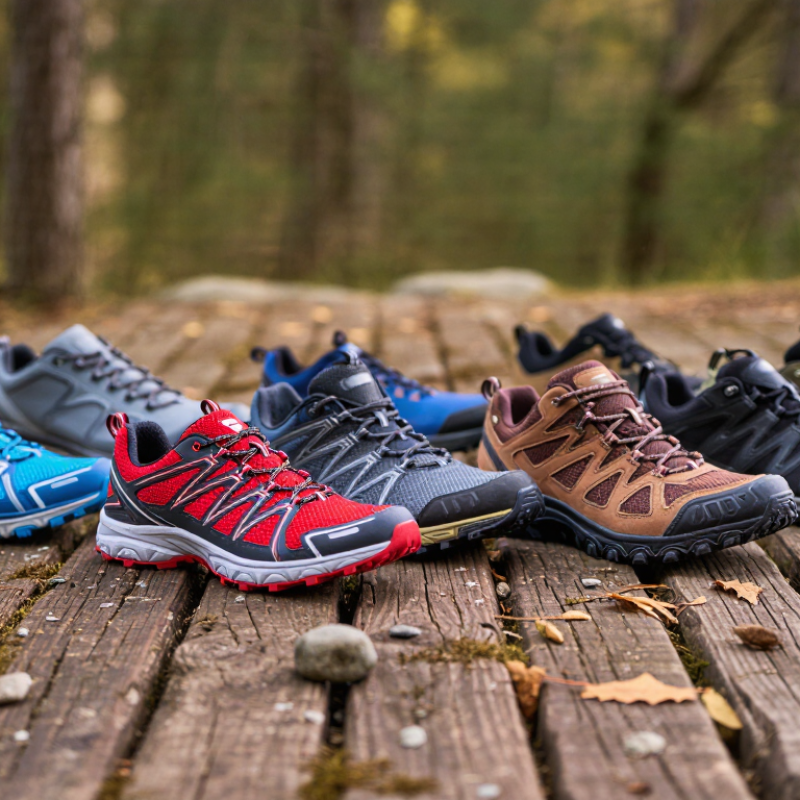
10 Best Hiking Shoes for Men in 2026

What Defines a Men’s Hiking Shoe in 2026

A men’s hiking shoe in 2026 is defined less by its label than by how it handles uneven ground. Look for a stable heel, enough room for toes to spread, and a grippy outsole that holds on wet roots and loose gravel. A firm midsole can steady your step, but too much stiffness may feel tiring on long walks. Waterproofing helps in cold, muddy conditions; in warm weather, it can trap heat. There is no perfect shoe for every trail.

The Outdoor Industry Association’s 2024 Outdoor Participation Trends Report estimates that 175.8 million Americans took part in outdoor recreation in 2023. That scale matters: hikers meet very different terrain, weather, and distances. The report does not prescribe shoe features, so treat it as context, not proof that one design suits everyone. Fit still varies by foot shape and sock thickness. A small heel slip can become a blister after several miles. I would not judge a shoe by a short indoor try-on alone.

Tips: Test shoes late in the day, when feet may be slightly swollen. Walk downhill if possible; check that toes do not strike the front. Try your usual hiking socks. A little uncertainty remains until the shoes meet real trail conditions.

Main Hiking Shoe Types and Their Intended Uses

Trail runners suit fast day hikes, dry trails, and light packs. Their flexible soles and breathable uppers feel nimble, but offer less protection on rocky ground. Light hiking shoes add firmer midsoles and tougher toe guards for mixed terrain. They work well for most maintained paths. Still, “light” does not mean equally supportive for every foot.

Mid-cut boots help stabilize ankles under heavier packs or on uneven trails. They can feel hot and stiff, though, especially during warm-weather climbs. Waterproof shoes are useful in persistent rain and wet grass, but often dry slowly after water enters over the collar. Approach shoes have sticky rubber and precise footholds for scrambling near cliffs. They are less comfortable for long, flat walks. No type does everything well.

The Outdoor Industry Association’s 2024 Outdoor Participation Trends Report counted 175.8 million U.S. outdoor recreation participants in 2023. That broad figure shows the scale of outdoor activity, not how many people hike or which shoes they need. Match footwear to terrain, pack weight, and expected weather. Check fit late in the day, when feet may swell, and leave space for downhill toe movement. A shoe that feels secure indoors can still rub on a long descent.

How the Ten Shoes Were Evaluated and Compared

The ten shoes were compared against the demands of real hiking, not appearance alone. The Outdoor Industry Association’s 2024 Outdoor Participation Trends Report counted 175.8 million U.S. outdoor participants in 2023, a reminder that trail conditions vary widely. We therefore assessed outsole grip, underfoot protection, stability, breathability, water resistance, weight, and fit. Where hands-on testing was available, reviewers walked on firm paths, loose gravel, and damp surfaces. We also checked published specifications and separated measured results from manufacturer claims. Small details mattered: a heel that lifted on a short climb, or a toe box that squeezed after a long descent.

Grip assessments considered established test practice, including ASTM F2913, which measures footwear friction against test surfaces. A laboratory result cannot fully predict traction on wet roots or shifting scree. That remains a limitation. We compared cushioning and support over varied distances, while noting that comfort depends on foot shape, socks, and pack weight. Scores favored useful performance across several conditions, rather than one standout feature. Fit judgments are especially imperfect; the same shoe can feel secure on one hiker and cramped on another. We treated durability cautiously, too, because short trials cannot confirm months of wear. Each ranking reflects the evidence available, not a universal answer for every trail.

10 Best Hiking Shoes for Men in 2026 — How the Ten Shoes Were Evaluated and Compared

Evaluation criteria and their share of the overall score

The chart presents an editorial scoring framework, not measured results for specific shoes. Traction and durability receive the greatest emphasis, followed by comfort and fit, weather protection, and weight. Each shoe would be assessed against the same criteria for a consistent comparison.

Ten Standout Hiking Shoes for Men in 2026

Ten standout hiking shoes for men in 2026 should match the trail, not just look rugged. Useful designs include lightweight trail shoes, waterproof low-cuts, breathable mesh shoes, wide-fit options, and deep-lug soles. Other standouts offer ankle coverage, protective rock plates, long-distance cushioning, grippy approach-style outsoles, or durable leather uppers.

Fit comes first. Even a well-reviewed shoe can rub after several miles, especially on steep descents. This shortlist compares design strengths, not guaranteed winners; foot shape and pack weight can change the best choice.

The Outdoor Foundation’s 2024 Outdoor Participation Trends Report counted 175.8 million U.S. outdoor participants in 2023, making reliable trail footwear relevant to a broad range of hikers. That figure tracks outdoor participation, not shoe performance.

Look for a secure heel, room for toes to spread, and traction suited to your usual terrain. Check whether cushioning still feels stable on uneven ground, and try shoes with the socks you plan to hike in. Test downhill, too. A shoe that feels perfect on a flat shop floor may tell a different story on loose gravel.

How to Choose a Pair for Your Terrain and Fit

Choosing hiking shoes starts with the ground beneath you. For dry, maintained paths, flexible low-cut shoes can feel lighter and roll naturally. Rocky routes call for firmer soles and protective toe caps; muddy slopes need deep, widely spaced lugs for grip. The Outdoor Industry Association’s 2024 Outdoor Participation Trends Report counted 175.8 million U.S. outdoor participants in 2023, a reminder that “hiking” covers very different conditions. Match the shoe to your usual route, not its most dramatic photograph. Small distinction. A stiff sole may help on sharp rock, but feel clumsy on smooth paths.

Fit matters just as much as tread. Try shoes late in the day, wearing the socks you hike in. Leave roughly a thumb’s width beyond your longest toe, then walk downhill or down a ramp: toes should not strike the front, and your heel should stay mostly planted. A 2018 systematic review in the Journal of Foot and Ankle Research reported that 63–72% of participants wore improperly fitting footwear. That is a striking range, though foot shape and measurement methods vary. Test both feet, since they may differ. Tighten laces over the midfoot without crushing the top of your foot. A little heel movement can be normal; persistent rubbing is not. Break shoes in on short walks before a long trail day. My own judgment can still be fooled by a soft first step. Comfort in the shop is only an early clue.