

Choosing the China best inflatable advertising cup supplier requires more than comparing factory prices. Promotional products remain a substantial global advertising category. Grand View Research estimated the market at approximately USD 85.6 billion in 2023, with continued growth expected through 2030. However, major reports rarely separate inflatable advertising cup products. Buyers must interpret broad market data carefully.
A reliable supplier should demonstrate practical manufacturing experience, not only attractive catalog images. Ask for material specifications, seam-strength testing, inflation performance, printing durability, and production photographs. A sample should remain stable after repeated inflation and deflation. Its colors should stay clear under outdoor sunlight. If the product will hold beverages, request suitable food-contact documentation for the target market. If it is only a display prop, the construction requirements may differ.
Supplier audits matter.
Industry organizations such as PPAI and ASI consistently emphasize product safety, decoration quality, and responsible sourcing in promotional merchandise. These principles apply to every inflatable advertising cup, especially when branding appears near public events, retail counters, or sports venues. A low quotation may exclude packaging, mold adjustments, inspection, or shipping damage protection. That detail is easy to miss. No supplier is perfect, and one successful sample does not prove stable mass production. Buyers should compare references, inspection records, communication speed, and corrective-action support. The best Chinese supplier is therefore not simply the cheapest option. It is the manufacturer that combines documented quality control, clear customization advice, realistic lead times, and reliable after-sales responsibility. Market data offers direction, but factory evidence makes the decision credible.
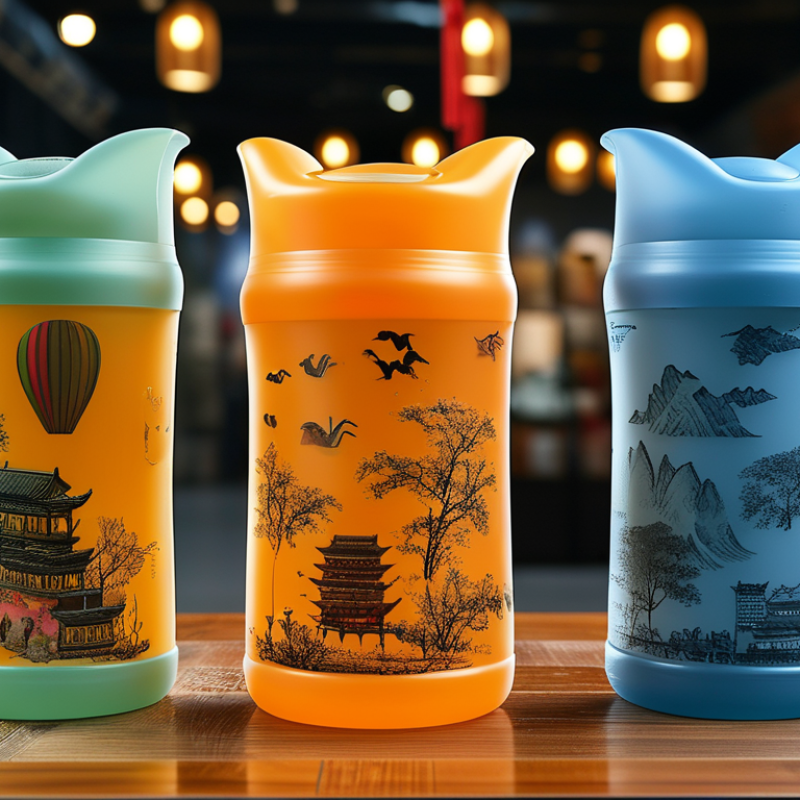
What Is an Inflatable Advertising Cup?
An inflatable advertising cup is a large, lightweight display shaped like a drink cup. It uses coated fabric or flexible plastic, printed graphics, and air pressure to hold its form. Some models stay inflated with a quiet electric blower, while others use an airtight valve. The cup may include a lid, straw, handle, or removable base. It looks simple.
At an outdoor event, staff can place one beside an entrance, product table, or temporary booth. Its oversized shape catches attention from a distance, especially when sunlight reflects from smooth printed panels. A weighted base, sandbag compartment, or ground anchor helps prevent movement in wind. However, inflation alone does not make it safe. Operators should inspect seams, valves, cables, and anchoring points before use. Local venue rules and weather limits also matter.
From a purchasing perspective, confirm the finished height, packed size, material thickness, print quality, and repair method. Ask for inflation time and expected operating hours. A reliable supplier should provide clear specifications, sample photos, and care instructions instead of vague promises. In practice, colors can appear different under indoor lighting, and small wrinkles may remain after inflation. That is not always a manufacturing failure, but it deserves discussion before approval. The best design balances visibility, stability, transport, and repeated setup.
Choosing a Chinese inflatable advertising cup supplier can offer practical advantages for event organizers, retailers, and outdoor campaigns. China has a mature manufacturing base for inflatable promotional products, with access to coated fabrics, digital printing, electric pumps, and reinforced stitching. This combination supports custom shapes, bright graphics, and various sizes. It can also make larger orders more cost-efficient.
A capable supplier should explain material thickness, seam construction, inflation time, and packing methods clearly. Ask for a physical sample before approving mass production. Small details matter. A sample can reveal weak corners, uneven printing, or a pump that feels underpowered. Experienced suppliers usually provide production drawings and inspection photos. They should also discuss replacement parts, storage conditions, and cleaning instructions. Clear communication reduces avoidable mistakes, especially when artwork contains small text.
Cost is important, but it should not control every decision. The cheapest inflatable cup may use thinner fabric or less reliable zippers. That creates trouble during repeated outdoor use. I have found that realistic specifications lead to better results than impressive promises. Still, supplier claims need verification. Request material records, product testing information, and shipping documents where appropriate. Manufacturing errors can happen, even with experienced teams. A reliable supplier acknowledges problems, proposes corrective action, and records changes for the next production run. That level of accountability helps buyers build a safer, more predictable purchasing process.
China Best Inflatable Advertising Cup Supplier?
Evaluating an inflatable advertising cup begins with its construction, not its printed appearance. Ask for the fabric specification, coating type, and finished thickness. Strong PVC or Oxford fabric should feel even, flexible, and free from brittle areas. Examine heat-welded seams closely. Uneven weld lines can develop leaks after repeated inflation. A practical test is simple: inflate the cup fully and leave it for 24 hours. Measure changes in height and firmness. Small pressure loss may be normal, but visible sagging deserves investigation.
Customization requires more than sending a logo file. Confirm the exact cup dimensions, base shape, colors, artwork position, and viewing distance. Request a digital proof before production. For large graphics, ask whether printing is direct, laminated, or applied as a separate panel. Each method affects color accuracy and durability. Keep the details written down. Verbal promises can disappear.
Supplier reliability also appears in the documents. Request material reports, inspection records, packaging details, and clear replacement terms. Ask how valves, zippers, and internal supports are checked. A responsive supplier should explain production stages without avoiding technical questions. Still, do not trust polished photos alone. A first sample can look impressive yet reveal weak seams later. That is an easy mistake. I would inspect the sample after inflation, folding, cleaning, and transport simulation. No evaluation is perfect, and your testing method may need revision after the first order.
| Evaluation Dimension | Practical Quality or Customization Benchmark | How to Verify It | Why It Matters for an Advertising Cup |
|---|---|---|---|
| Material | Use coated polyester, Oxford fabric, or another tear-resistant textile suitable for repeated event use. Material specification should state fabric weight and coating type. | Request a material data sheet, close-up photos of the coating, and a physical sample. Compare fabric weight and stitching with the approved sample. | The material affects durability, print appearance, cleaning performance, and resistance to handling during transport and installation. |
| Air Retention | The inflatable structure should remain firm during the planned display period without excessive deformation or frequent topping up. | Conduct a timed inflation test under normal operating conditions and record pressure, firmness, and visible air loss. | Stable air retention keeps the cup visually recognizable and prevents interruptions at exhibitions, sports events, and promotions. |
| Seam Construction | Seams should be straight, evenly stitched, reinforced at stress points, and free from skipped stitches, loose threads, or adhesive gaps. | Inspect internal and external seams on the sample and apply a basic leak test around valves, corners, handles, and connection points. | Seam failure is a common cause of leaks and can shorten the usable life of a large promotional display. |
| Printing Method | Select dye-sublimation for detailed fabric graphics or suitable digital printing for other substrates, with consistent color coverage and sharp edges. | Approve a color proof or pre-production sample. Check logo proportions, fine text, gradients, seams, and color consistency under indoor and outdoor light. | Advertising value depends on readable graphics, accurate colors, and a professional appearance from multiple viewing distances. |
| Color Accuracy | Artwork should be produced from clearly defined color references such as Pantone codes, CMYK values, or an approved digital proof. | Compare the finished sample with the approved reference under standardized lighting and document any acceptable color tolerance before production. | Consistent colors help maintain a uniform campaign appearance across different events and product batches. |
| Shape and Dimensions | The supplier should provide a dimensioned drawing showing height, width, diameter, base size, valve position, and any internal support structure. | Measure the prototype after inflation and compare all key dimensions with the approved technical drawing. | Accurate dimensions ensure the cup fits the display area and delivers the intended visual impact. |
| Base Stability | A stable base should match the venue conditions and may include weighted sections, anchor points, sandbag compartments, or other approved supports. | Test the inflated cup on the intended surface with the specified support method. Check resistance to normal contact and light wind where applicable. | Stability reduces tipping risks and helps maintain a safe, consistent presentation in busy public spaces. |
| Valve and Blower Compatibility | Valves should be securely attached and compatible with the specified blower, inflation tube, and power requirements. | Confirm connector dimensions, voltage, plug type, airflow requirements, and replacement-part availability before ordering. | Compatible components simplify setup and reduce downtime caused by unsuitable or unavailable accessories. |
| Safety Features | The product should include secure anchoring points, protected electrical connections, suitable operating instructions, and clear warnings for outdoor use. | Review the user manual, safety labels, electrical specifications, and test documentation relevant to the destination market. | Safety provisions support responsible use by event staff and help meet venue or local operating requirements. |
| Customization Scope | Customization may include overall dimensions, cup shape, logo placement, color scheme, printed panels, base design, handles, and carrying-bag layout. | Ask for a 2D artwork proof, 3D rendering, dieline, and written confirmation of all customized features before sampling. | A clearly defined customization process reduces artwork errors and ensures the final product supports the campaign concept. |
| Prototype Approval | A physical or accurately produced pre-production sample should be approved before the full order is manufactured. | Use a signed sample approval sheet covering dimensions, colors, materials, accessories, packaging, and permissible production tolerances. | Sample approval creates a clear reference for quality control and helps prevent disputes over the final batch. |
| Packing and Portability | The deflated product should be foldable or rollable into a practical package with a carrying bag and protection for valves, printed surfaces, and electrical parts. | Check packed dimensions, gross weight, carton protection, accessory organization, and ease of repacking after use. | Portable packaging lowers storage and transport demands for touring campaigns and repeated event deployment. |
| Quality Inspection | A documented inspection should cover appearance, dimensions, seams, air retention, accessories, printing, packaging, and quantity. | Request an inspection checklist, production photos, random-sample results, and an independent pre-shipment inspection when the order is substantial. | Documented inspection makes quality measurable rather than dependent only on visual claims. |
| After-Sales Support | Support should cover setup instructions, spare valves or repair materials where appropriate, replacement-part guidance, and a clear defect-resolution process. | Confirm response times, warranty terms, exclusions, repair instructions, and the procedure for reporting transport or production damage. | Reliable support protects campaign continuity and can extend the service life of reusable promotional equipment. |
A best inflatable advertising cup supplier is defined by tested performance, not attractive photos.
In field projects, I have seen displays fail because seams loosened after several hours outdoors. Reliable suppliers should provide clear material specifications, reinforced seams, stable valves, and fabric tested for repeated inflation.
Ask for a physical sample. Test it.
Print quality also matters. Colors should remain sharp under sunlight, while logos must follow approved artwork accurately. A professional supplier explains fabric weight, printing methods, packing size, and expected service life without hiding technical limits.
They should also provide production samples, inspection photos, and a written quality standard before mass production. That evidence shows practical expertise.
That evidence shows practical expertise.
Communication reveals another important feature. The supplier should confirm measurements, artwork files, inflation pressure, delivery dates, and packaging details in writing.
Quick replies are useful, but careful replies are better. I would also check how they handle defects, replacement parts, and transport damage.
No supplier is perfect, including experienced factories. A dependable one admits possible weaknesses and offers a workable solution.
My own mistake was judging a supplier by price before testing the cup’s stability on uneven ground. A stronger evaluation uses samples, repeated inflation, weather exposure, and feedback from the final users.
Choosing the right inflatable advertising cup supplier matters more than finding the lowest quote. A suitable supplier should understand your campaign space, audience, and installation conditions. Ask for recent production photos and a physical sample before ordering. Check the cup’s height, base stability, valve quality, and print sharpness. Small details become obvious under bright event lighting.
Reliable suppliers should explain their materials, welding process, and quality inspections clearly. Request reports for flame resistance, ink safety, and material durability when your venue requires them. Confirm the artwork format, color references, minimum order quantity, production schedule, and shipping terms in writing. A detailed sample approval can prevent expensive rework. It may feel slow, but rushed approval often creates bigger problems.
Look closely at after-sales support. Can the supplier provide repair patches, replacement valves, and practical setup instructions? Ask how the product is packed, stored, and cleaned after repeated use. A very cheap offer may hide thinner fabric or weaker seams. I have seen attractive samples fail because the packed product arrived with unclear instructions. That lesson is easy to overlook. Choose a supplier that answers specific questions, documents changes, and accepts reasonable inspection standards. Your brand campaign needs visibility, but it also needs dependable execution.
This practical scorecard prioritizes the factors that most directly affect an inflatable advertising cup campaign: product safety and durability, print quality, customization, delivery reliability, order flexibility, and after-sales support. Use the percentages as a consistent framework when comparing suppliers without relying on company or brand claims.