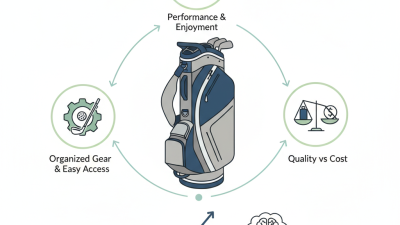

How to Choose the Best Womens Golf Bag?

Choosing the right womens golf bag is less about appearance than how it performs during a real round. I learned this after carrying a beautiful bag that became awkward by the 14th hole. Its straps slipped, pockets filled quickly, and the stand caught in wet grass. That experience changed my buying checklist. A reliable bag should support your clubs, water, gloves, rangefinder, and personal items without creating unnecessary strain. Comfort matters.

This guide examines weight, strap design, club organization, waterproof protection, pocket access, and stand stability. It also considers cart compatibility, because a lightweight carry bag may behave poorly on a riding cart. Materials, stitching, zippers, and warranty support reveal more than color or branding. Product specifications will be compared with practical use, not marketing language alone. Measurements can still mislead. Small details often decide whether a bag feels helpful or frustrating after several hours outside.

A professional fitting mindset helps, even when shopping online. Check the bag’s empty weight, divider layout, base width, and handle placement. Think about your usual course, walking distance, weather, and equipment changes. A dependable womens golf bag should fit your routine, not an imagined golfer. Reviews from experienced players can expose recurring problems, but they deserve careful reading. Personal preference remains important, and no single design suits everyone. The goal is a balanced choice: comfortable enough to carry, organized enough to use, and durable enough to earn trust over many seasons.
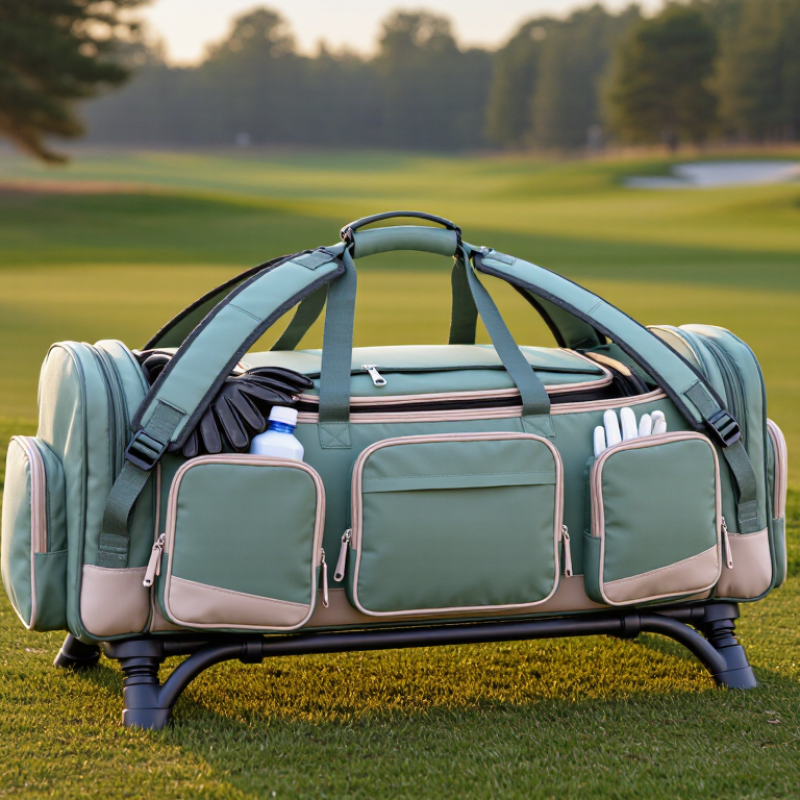
How to Choose the Best Womens Golf Bag?

Define Your Carry Needs Using USGA’s 14-Club Equipment Limit

How to Choose the Best Women’s Golf Bag?

Choosing a women’s golf bag starts with your actual carrying needs. Under USGA Rule 4.1b, a player may carry no more than 14 clubs during a round. That limit should shape your bag choice. Count your clubs before shopping. Then add balls, gloves, tees, a towel, water, and personal items. A compact stand bag may suit walkers who carry only essential equipment. However, a larger bag can feel better if you use a push cart or carry extra clothing.

I have found that weight distribution matters more than appearance. A bag can feel light in a store but awkward after nine holes. Look for padded straps, balanced pockets, and a stable stand system. Check whether the club openings fit your grips without crowding. Oversized openings sound useful, yet they can increase bulk. I once chose convenience over balance and regretted it on hilly courses. That mistake still influences my buying decisions.

Tips: Place heavier items near your back and keep frequently used items within reach. Test the bag with your full 14-club set. Walk several minutes before deciding. Check zipper movement while wearing gloves. Leave some space for rain gear. A bag that fits your current clubs may not suit future changes, so allow modest room.

How to Choose the Best Womens Golf Bag? - Define Your Carry Needs Using USGA’s 14-Club Equipment Limit

Carry Profile Typical Club Setup Recommended Bag Weight Useful Divider Range Storage Priority Best Fit
Minimal carry 7–9 clubs, including a putter, a driver or fairway wood, several irons, and one or two wedges Approximately 1.5–2.5 kg 4–6 full-length dividers One valuables pocket, one accessory pocket, and a water-bottle sleeve Short practice sessions, par-3 courses, and golfers who prioritize the lightest load
Balanced carry 10–12 clubs, usually covering a driver, fairway wood or hybrid, irons, wedges, and a putter Approximately 2.0–3.0 kg 5–7 full-length dividers Separate valuables storage, clothing space, ball storage, and an insulated drink compartment Most walking golfers who want useful club coverage without carrying the maximum set
Full-set carry 13–14 clubs, using the maximum number of clubs permitted during a round under USGA Rule 4.1b Approximately 2.5–4.0 kg 8–14 dividers, depending on how individually separated the clubs need to be Multiple clothing and accessory compartments, a waterproof valuables pocket, and room for spare gloves and balls Experienced walkers who want nearly complete distance coverage and organized club access
Wet-weather carry Any legal club combination from 7 to 14 clubs Choose the lightest suitable option because rain gear adds extra weight 5–14 dividers, based on club quantity and preferred organization Water-resistant construction, sealed or protected zippers, a rain hood, and a separate dry-storage area Golfers who regularly walk in changing weather conditions
Cart-assisted carry 12–14 clubs, with more emphasis on equipment access than minimum weight Approximately 3.0–5.0 kg 10–14 dividers for easy club sorting Large pockets, cart-strap compatibility, accessible scorecard storage, and a secure valuables compartment Golfers who sometimes walk but commonly use a pull cart or riding cart

USGA equipment limit: A player may not start a stipulated round with more than 14 clubs. Carrying fewer than 14 clubs is permitted, so the best bag size should match the number of clubs you regularly use rather than the maximum allowance alone.

Compare Bag Types by Weight, Storage, and Walking Frequency

How to Choose the Best Womens Golf Bag?

Compare Bag Types by Weight, Storage, and Walking Frequency

Choosing the best women’s golf bag starts with your walking habits, not its color or pocket count. For frequent walkers, target a bag around four pounds, with padded straps and a stable stand. A lighter frame reduces shoulder strain during an eighteen-hole round. It should still hold several clubs, a water bottle, balls, gloves, and a light jacket.

Walking Bags

I once chose the lightest option available. By the back nine, the narrow straps felt uncomfortable.

Cart Bags

Cart bags suit golfers who usually ride. They offer larger pockets, wider club dividers, and better space for rainwear or extra accessories. However, their weight can become inconvenient when moving between the car, practice area, and clubhouse. A full bag may exceed ten pounds before adding equipment. Check whether the base sits securely on your cart. Loose movement can make clubs rattle during turns.

Hybrid Bags

Hybrid bags offer a practical middle ground. They work for occasional walking and regular cart use. Look for comfortable straps, a firm base, accessible storage, and a reliable rain hood. Storage should match your routine. More pockets are not always better.

In a fitting check, place your actual clubs inside and lift the bag for one minute. Notice pressure around your shoulders and hips. The right choice may feel slightly less impressive in the store, yet far better after several holes.

Assess Club-Divider Layouts for a Standard 14-Club Set

How to Choose the Best Womens Golf Bag?

A standard golf setup can contain up to 14 clubs under the USGA Rules of Golf. That number should guide your divider choice, not dictate it blindly. The National Golf Foundation’s 2024 participation report found that women represented about one-quarter of on-course golfers in the United States. More players need practical organization, especially when clubs have oversized grips or headcovers.

A 14-way divider gives every club a separate channel. It looks tidy, but narrow openings may slow removal on a crowded tee box. A four- or five-way layout can provide wider access and reduce snagging. However, clubs may touch and rattle inside the bag. Test the bag with your actual set, including the largest driver and putter grip. Do not rely only on empty-store displays.

Full-length dividers help prevent shafts from crossing near the base. That detail matters when walking, because repeated pulling can become frustrating. The R&A and USGA equipment rules confirm the 14-club limit, but they do not require 14 compartments. Your carrying habits should decide the layout. A 2023 report from the Sports & Fitness Industry Association also showed continued growth in women’s golf participation, suggesting that comfort and usability deserve more attention. I prefer clear access over perfect symmetry. Still, I have found that an overfilled five-way divider can become messy after several rounds. A small mistake in layout can feel large by the eighteenth hole.

Evaluate Waterproofing Through IP Ratings and Material Specifications

How to Choose the Best Womens Golf Bag?

Waterproofing deserves more than a glossy product description. The IEC 60529 standard defines IP ratings for enclosure protection. IPX4 resists splashing water, while IPX6 withstands powerful water jets. IPX7 covers temporary immersion, but golf bags rarely receive full IP certification. Ask for the actual test scope. A bag tested only on its fabric is not waterproof overall.

Material specifications reveal more. Look for polyester or nylon with a polyurethane coating, preferably with sealed seams. A hydrostatic-head result, measured in millimetres, gives stronger evidence than “water-resistant.” ISO 811 is commonly used to measure fabric resistance against water pressure. Higher results generally indicate better protection, though stitching and zippers can still leak. A rain cover should protect the openings, not hide weak construction.

In practical testing, place the bag beside a wet cart path. Check whether water collects around the base, pocket edges, and zipper pulls. I would also inspect the seam tape by hand. It should feel continuous, not patchy. The 2023 Sports & Fitness Industry Association report recorded 28.1 million on-course golfers in the United States during 2022, showing how often equipment faces changing outdoor conditions. Still, IP numbers can create false confidence. My judgment is imperfect when manufacturers omit test pressure, duration, or laboratory details. Choose transparent specifications over impressive wording.

Verify Fit, Comfort, and Warranty Against Manufacturer Data

Choosing the best women’s golf bag starts with manufacturer data, not color or appearance. The National Golf Foundation’s 2024 participation data places women at roughly one-quarter of U.S. on-course golfers. That share supports better fit testing, not simply smaller versions of standard bags. Check the listed dimensions, empty weight, pocket layout, and club-divider length. Then compare them with your torso length and usual club set.

Comfort becomes obvious after nine holes. A padded strap should sit flat across the shoulder, without cutting into the neck. A hip pad should remain stable when walking uphill. I once trusted a soft-looking strap and ignored its adjustment range. My shoulder noticed by the 12th hole. The Sports & Fitness Industry Association’s 2024 participation report identifies walking and equipment access as practical parts of golf participation. That makes carrying comfort a performance factor, not a cosmetic detail.

Warranty terms deserve the same attention as fit. Read the manufacturer’s stated coverage period, exclusions, repair process, and proof-of-purchase requirements. Compare those details with independent consumer-service findings from the Better Business Bureau’s complaint data, where response quality can reveal weaknesses beyond product specifications. Ask whether stitching, zippers, stand mechanisms, and straps are covered separately. Keep the answer in writing. Small omissions matter. A bag can feel perfect in a shop, yet fail under repeated rain, packed pockets, and uneven paths. My own testing would be better with a loaded-bag trial, because an empty display model hides the real strain.