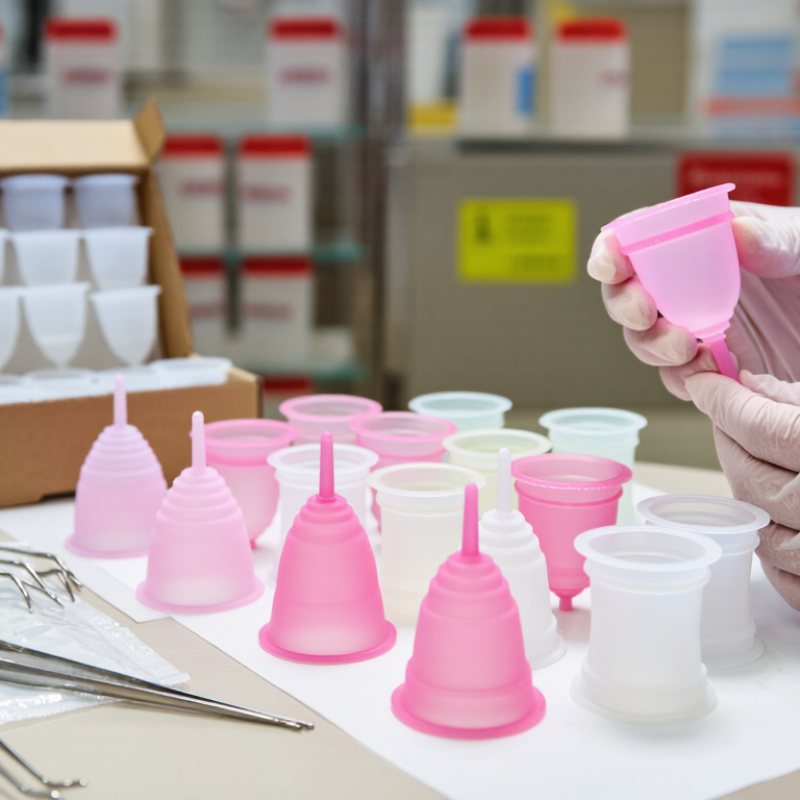
Choosing trustworthy Menstrual Cup Manufacturers requires more than comparing unit prices or polished websites. The right supplier must prove product safety, material consistency, manufacturing control, and dependable communication. A menstrual cup touches sensitive tissue for several hours. Small defects can matter.
Market reports show why this sourcing decision deserves care. Grand View Research estimates that the global menstrual cup market will continue expanding through 2030, supported by reusable-product demand and rising menstrual-health awareness. Fortune Business Insights reports similar growth, although market estimates differ by research method and regional coverage. That difference is important. No single report should guide a supplier decision.
UNICEF’s Guidance on Menstrual Health and Hygiene emphasizes safe, informed, and dignified menstrual-product use. It also highlights the importance of water, sanitation, privacy, and reliable information. These factors should influence manufacturer evaluation, not just marketing claims. Ask for material specifications, batch records, laboratory test results, and documented quality procedures. Look closely at silicone grades, cup hardness, rim finishing, packaging cleanliness, and odor after sterilization. Request samples from different production batches. Compare them under real handling conditions.
A credible factory welcomes detailed questions. It should explain its testing scope, corrective-action process, and traceability system. Certifications help, but certificates alone are not proof of consistent performance. That is an uncomfortable lesson. Some suppliers present impressive documents while offering weak production evidence. Independent verification remains valuable. This guide examines practical checks, essential questions, and warning signs. The goal is not the cheapest factory. It is a manufacturer capable of producing safe, consistent, and user-centered menstrual cups over time.
Reliable menstrual cup manufacturers should begin with defined safety criteria, not attractive packaging.
ISO 10993 provides a biological evaluation framework for materials contacting the body. Ask for documented testing on cytotoxicity, irritation, and sensitization.
Request the full laboratory reports, not only a compliance statement. Check the tested material, batch number, test method, and laboratory qualifications. Missing details deserve questions.
An 8–12-hour wearing claim also needs evidence. It should reflect material safety, airflow, capacity, cleaning instructions, and real-use testing.
A 2019 systematic review in The Lancet Public Health examined 43 studies involving 3,319 participants. It found menstrual cups were generally safe and effective, but leakage still occurred for some users.
That matters. A longer claim is not automatically a better claim.
Manufacturers should explain how the cup performs across different flow levels and body conditions. Ask whether testing included repeated cleaning cycles and extended contact simulations.
ISO 10993 does not prove every product is safe forever. It supports a risk-based evaluation.
I would also question reports with perfect results and no limitations. Real testing has variation.
Supplier audits, traceable production records, and retained samples strengthen reliability. A careful review may feel slower, but rushed documentation can create larger problems later.