

How to Source Custom Golf Clubs from Manufacturers?
Sourcing custom golf clubs from manufacturers requires more than comparing factory prices. It demands product knowledge, careful testing, and honest communication. Every detail matters, including head shape, loft, lie angle, shaft profile, grip size, finish, and swing weight. A manufacturer may promise precision, but samples reveal the truth.
Tom Wishon, a respected golf-club designer and founder of Wishon Golf, said, “There is no such thing as a standard golf club.” That principle should guide every sourcing decision. A reliable supplier will ask about player ability, target markets, performance goals, and expected order volumes. They should also provide technical drawings, material specifications, production tolerances, and clear quality-control procedures.
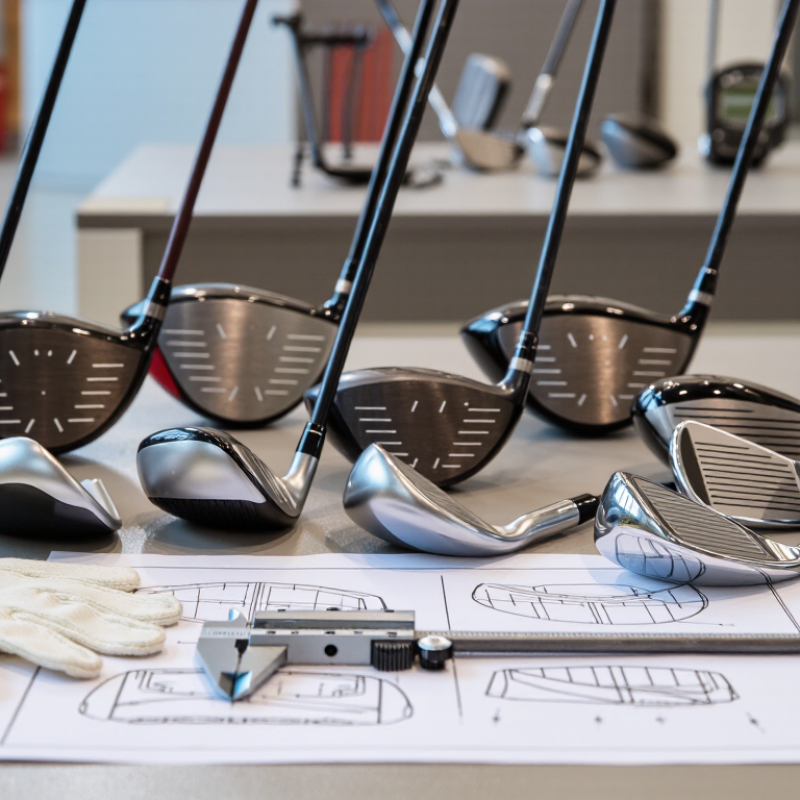
Start with a detailed product brief. Include the desired club type, dimensions, materials, branding method, packaging, and testing requirements. Then request prototypes before approving bulk production. Check the grooves, paint fill, hosel alignment, shaft installation, grip position, and measured swing weight. Small inconsistencies can become expensive problems across hundreds of units.
Factory experience matters. Review production equipment, inspection tools, sample records, and communication speed. Ask how rejected components are handled. Ask again if the answer sounds vague.
My own sourcing approach would not rely on photographs alone. They can hide uneven finishes and weak assembly work. Independent testing is useful, but it does not replace physical inspection. Manufacturers should also confirm that the clubs meet applicable sporting standards and labeling requirements.
Price is only one part of the decision. A slightly higher quotation may include better materials, tighter tolerances, and fewer returns. Still, no supplier is perfect. Delays happen, and specifications can be misunderstood. A written agreement, approved reference sample, and staged inspections reduce those risks when developing custom golf clubs.
Define Custom Golf Club Requirements and Target Players
How to Source Custom Golf Clubs from Manufacturers?
Define Custom Golf Club Requirements and Target Players
Start with the player, not the club design. Record handicap, swing speed, ball flight, typical miss, height, wrist-to-floor measurement, and playing conditions. A beginner needing forgiveness requires different specifications from a low-handicap player seeking tighter control. According to the National Golf Foundation’s 2023 Golf Participation report, 28.1 million Americans played on a golf course. The market is broad, so one universal specification will fail.
The R&A’s Golf Around the World 2023 report estimated 66.6 million golfers across 206 countries. This supports segmented sourcing. Ask manufacturers to separate models by player profile, shaft weight, loft range, lie angle, and grip size. Request prototype measurements, material details, tolerance ranges, and independent performance testing. Confirm that the finished clubs meet applicable equipment rules. My early sourcing mistake was focusing on appearance before swing data. It created attractive samples with inconsistent launch results. That still influences my process.
Tips: Build a simple player matrix before contacting factories. Include age, skill level, swing speed, dominant miss, budget, and climate. Ask for five identical samples, then compare loft, lie, total weight, and face performance. Measure twice. Fit beats decoration. Do not rely only on factory claims. Independent verification is worth the extra cost. Some requirements may remain uncertain until real players test the clubs. Record those gaps instead of hiding them.
How to Source Custom Golf Clubs from Manufacturers? - Define Custom Golf Club Requirements and Target Players
A practical product-planning reference for defining club specifications, fitting variables, target players, and quality requirements before contacting a golf club manufacturer.
| Club Category | Recommended Loft Range | Typical Length Range | Primary Player Segment | Common Swing-Speed Reference | Preferred Shaft Profile | Forgiveness and Design Requirements | Customization Priorities | Manufacturer Information to Request |
|---|---|---|---|---|---|---|---|---|
| Driver | 9°–12° | 44.5–46 inches | Players seeking maximum distance, launch assistance, or improved accuracy from the tee | Below 85 mph: higher launch support 85–105 mph: mid-launch configuration Above 105 mph: lower-spin stability |
Lightweight high-launch shaft for slower swings; mid-launch or low-launch shaft for faster swings | High moment of inertia, perimeter weighting, adjustable weighting, and a large hitting area | Loft, lie angle, shaft weight, shaft flex, grip size, swing weight, and head finish | Face material, head volume, center-of-gravity location, tolerances, shaft options, and performance testing data |
| Fairway Wood | 15°–21° | 41–43 inches | Mid- to high-handicap players and golfers who need reliable distance from the fairway or tee | Below 90 mph: easier-launching design 90–105 mph: balanced launch and spin Above 105 mph: stronger ball-speed retention |
Mid- to high-launch profile with sufficient tip stability | Low center of gravity, shallow or mid-depth face, turf-friendly sole, and resistance to twisting | Loft gapping, sole design, shaft length, shaft weight, and face alignment | Launch and spin results, sole geometry, face progression, material construction, and production consistency |
| Hybrid | 19°–28° | 38.5–41 inches | Players replacing difficult-to-hit long irons or requiring versatile shots from rough and fairway | Suitable across a broad range; shaft selection should match the player's iron or fairway-wood profile | Light to mid-weight shaft with moderate launch and stable impact behavior | Wide sole, low center of gravity, high launch, and consistent turf interaction | Loft progression, sole width, offset, shaft profile, grip diameter, and head shape | Distance gapping, launch conditions, offset measurements, sole bounce, and lie-angle tolerances |
| Iron Set | 4-iron: 21°–24° 7-iron: 29°–34° Pitching wedge: 43°–48° |
4-iron: 37.5–39 inches 7-iron: 36.5–37.5 inches |
Beginners, recreational golfers, competitive amateurs, and players requiring specific launch and distance gaps | 7-iron speed below 70 mph: lighter and higher-launch setup 70–85 mph: standard mid-weight setup Above 85 mph: heavier and more stable setup |
Graphite or lightweight steel for easier launch; heavier steel or stable graphite for faster swings | Cavity-back construction, perimeter weighting, progressive sole widths, and controlled offset | Set composition, loft progression, lie angle, offset, shaft weight, shaft flex, swing weight, and sole width | Loft and lie tolerances, center-of-gravity progression, face thickness, grooves, plating, and quality-control process |
| Players' Iron | 3-iron: 19°–22° 7-iron: 32°–36° |
Approximately 36.5–39 inches | Low- to mid-handicap players who prioritize workability, trajectory control, and compact appearance | Generally suited to moderate or high swing speeds with consistent strike patterns | Mid- to high-weight shaft with stable tip and controlled launch | Compact head, thinner topline, reduced offset, consistent sole geometry, and precise feedback | Head shape, topline thickness, offset, sole grind, loft, lie, and swing weight | Dimensional tolerances, forging or casting method, surface finish, groove specifications, and impact testing |
| Wedges | Gap wedge: 48°–52° Sand wedge: 54°–58° Lob wedge: 58°–64° |
Approximately 34–36 inches | Players who need improved distance control, bunker performance, and short-game versatility | Selected primarily by wedge technique, delivery angle, and desired trajectory rather than driver speed | Moderate or heavy shaft for control; lighter options for players seeking additional launch | Multiple sole grinds, suitable bounce options, durable grooves, and stable impact feel | Loft, bounce, sole grind, leading-edge shape, groove geometry, finish, and grip size | Groove dimensions, face roughness, bounce tolerance, corrosion resistance, and performance after wear |
| Putter | Not applicable; loft commonly 2°–4° | 32–36 inches | All player levels, with selection based on stroke type, alignment needs, and preferred head shape | Not normally classified by swing speed; fitting focuses on stroke path, impact location, and tempo | Steel or graphite-steel construction selected for feel, stability, and balance | High alignment visibility, suitable face insert or milling pattern, stable head design, and consistent roll | Head shape, toe hang, lie angle, length, grip profile, alignment markings, and finish | Face-angle tolerance, loft and lie accuracy, balance point, roll testing, insert durability, and finish quality |
| Junior Golf Clubs | Varies by club length and player age | Approximately 26–38 inches | Young golfers developing coordination, swing speed, and basic course-management skills | Matched to height, strength, age, and demonstrated swing control rather than adult speed categories | Lightweight, flexible shaft with appropriate grip diameter | Reduced overall weight, shorter length, durable finish, and easy launch characteristics | Club length, total weight, grip diameter, shaft flexibility, color options, and set composition | Age and height recommendations, material safety, durability testing, weight tolerances, and replacement-part availability |
| Women’s-Length Configuration | Similar loft ranges to the corresponding club category | Usually 0.5–1.5 inches shorter than standard adult configurations, depending on fitting results | Golfers who benefit from lighter total weight, shorter length, and easier launch | Often designed around slower to moderate swing speeds, but individual fitting should determine the final specification | Lightweight graphite with flexible or moderate-flex profiles | Higher launch, moderate swing weight, comfortable grip size, and appropriate shaft balance | Length, total weight, grip circumference, shaft flex, loft, lie, and balance point | Weight consistency, shaft specifications, grip dimensions, length tolerances, and fitting recommendations |
| Left-Handed Configuration | Match the corresponding right-handed specification | Match the intended player segment and fitting requirements | Left-handed golfers requiring the same performance characteristics as right-handed players | Use the same player-fitting categories as the equivalent right-handed model | Selected according to swing speed, tempo, and desired launch | Preserve the original head geometry, offset, center of gravity, and performance target | Head availability, lie angle, face angle, grip orientation, and minimum order quantity | Left-handed tooling availability, production lead time, tooling charges, inspection standards, and spare-part support |
Planning note: The specifications above are practical starting ranges, not universal fitting rules. Final requirements should be confirmed through player testing, launch-monitor data, dimensional inspection, and a written manufacturer quality standard. Swing-speed references are approximate and should be combined with carry distance, impact quality, tempo, and delivery characteristics.
Related Posts
-

10 Best Custom Golf Clubs for Global Buyers?
-
Why Choose Custom Golf Clubs for Your Business?
-

What is a Golf Club Set and How to Choose the Right One?
-
Maximize Precision: The Science Behind Wedge Set Design for Enhanced Performance in Engineering
-
2025 How to Choose the Best Golf Irons for Your Game
-

How to Choose Used Golf Clubs for Optimal Performance and Value?