
10 Tips for Choosing the Best Golf Club Set?

Choosing a golf club set is not simply a matter of buying the most expensive bag. Your swing speed, height, skill level, playing frequency, and usual course conditions all influence the right choice. A beginner carrying stiff shafts may feel like they are fighting the club on every tee shot. That detail matters.

The National Golf Foundation reports that more than 28 million people played golf on U.S. courses in recent years, showing a large and diverse equipment market. The R&A’s Golf Around the World report also identifies millions of golfers across established and emerging markets. These figures suggest that no single golf club set can suit every player. The best decision requires practical testing, honest self-assessment, and advice from a qualified fitter or PGA professional.

Small differences become visible quickly. A cavity-back iron can offer more forgiveness on an off-center strike. A lighter graphite shaft may reduce fatigue during a long round. A higher-lofted driver could help some slower-swinging players launch the ball more easily. Still, these are not universal rules. Personal results can disagree with general guidance.

This guide presents ten useful tips for comparing club composition, shaft flex, loft gaps, grip size, set makeup, and total cost. It also considers independent testing and manufacturer specifications, rather than relying only on advertising claims. One important warning remains: choosing by appearance alone is tempting, but it can create expensive mistakes. A thoughtful fitting session may reveal that your ideal setup looks less impressive, yet performs better on real fairways.
10 Tips for Choosing the Best Golf Club Set?

Assess Handicap, Swing Speed, and the USGA 14-Club Limit

Choosing the best golf club set starts with your handicap, swing speed, and the USGA’s 14-club limit.

Tip 1: Record your Handicap Index before shopping.

Tip 2: Track carry distance, not total distance.

Tip 3: Measure driver speed with a launch monitor. TrackMan’s published averages place male amateur driver speed near 93 mph, while female amateur speed is near 79 mph.

Tip 4: Match shaft flex to speed and tempo.

Tip 5: Test mishits, not only perfect shots.

Tip 6: Compare gapping between clubs. A seven-iron carrying 145 yards and a six-iron carrying 147 creates wasted space.

The numbers need context. The USGA and R&A Distance Insights Report shows recreational golfers have gained distance gradually, but averages hide large individual differences.

Tip 7: Build a reliable wedge progression.

Tip 8: Keep one forgiving long club for difficult lies.

Tip 9: Remove duplicate clubs. Rule 4.1b of the Rules of Golf permits no more than 14 clubs during a round. More clubs do not automatically create better scoring.

Tip 10: Test the complete set outdoors when possible. Launch monitors can expose poor contact, but turf interaction still matters. Short game feel matters too.

A practical warning: swing speed can change with fatigue, weather, or injury. My first fitting assumptions would not survive every course. Recheck distances after several rounds, and question any club that looks impressive but rarely earns a confident swing.

Plan 4°–5° Loft Gaps to Reduce Distance Overlap

Choosing a golf club set becomes easier when loft gaps are treated as distance tools, not printed numbers. Aim for 4°–5° between neighboring irons and wedges. This spacing often creates more even carry distances and fewer awkward overlaps. A 28° club and a 32° club may appear different, yet actual yardages depend on strike quality, shaft length, and center of gravity. Loft is only one variable.

During fittings, I check each club on a launch monitor after several normal swings. I record carry distance, peak height, descent angle, and left-to-right dispersion. A seven-yard gap may suit one player, while another may need twelve. Test on the course, too. Wind changes the picture. A 5° gap can still produce similar carries when the weaker club is struck poorly or launched unusually high.

Do not force every club into a perfect chart. My early set had tidy loft spacing, but the longest irons overlapped badly because I lacked enough speed. That mistake taught me to replace one crowded club with a higher-lofted option or hybrid-style club. Wedge gaps deserve special care near the green. Keep enough separation for full swings while preserving touch shots around bunkers and tight lies. Recheck lofts periodically, because practice and turf contact can shift them slightly.

Use TrackMan Carry-Average Data to Compare Iron Performance

10 Tips for Choosing the Best Golf Club Set

Carry distance is more useful than total distance when comparing irons. It shows how far the ball flies before landing, without confusing rollout. Use launch-monitor carry-average data to judge each iron with greater accuracy. Hit at least eight shots with every club, then remove obvious mishits. Record the average, launch angle, ball speed, and dispersion. A single perfect strike can make an iron seem better than it is.

Look for consistent distance gaps between clubs. A practical set may show about 10 to 15 yards between neighboring irons, but your swing decides the real number. Pay close attention to the longest iron. If its average carry overlaps the next club, the set may create confusion on the course. The same problem can appear between a strong iron and a hybrid. Test both under similar conditions.

Indoor testing is useful, but it is not flawless. Launch monitors can produce different readings, and tired swings may reduce carry late in a session. I would repeat important shots on another day. That takes more time. It also exposes weak assumptions. Do not choose an iron only because it produces the longest average. Examine the shortest and longest carry, too. A slightly shorter club with tighter results may leave more predictable approach shots. Ask a qualified fitter to check your setup, strike location, and gapping before ordering a complete set.

10 Tips for Choosing the Best Golf Club Set? - Use TrackMan Carry-Average Data to Compare Iron Performance
No. Selection Tip TrackMan-Style Metric Reference 7-Iron Carry Averages How to Use the Data When Choosing a Set
1 Start with carry distance, not total distance Carry distance
Measured in yards
Tour-level: 172 yd
Low handicap: 160 yd
Mid handicap: 145 yd
High handicap: 125 yd
Compare clubs using carry only. Roll distance changes with turf, weather, landing angle, and course conditions, while carry provides a more reliable basis for gapping.
2 Check ball-speed requirements Ball speed
Measured in mph
Tour-level: 120 mph
Low handicap: 110 mph
Mid handicap: 98 mph
High handicap: 85 mph
Choose a head and shaft combination that produces usable launch and carry at your normal speed. A stronger loft is not automatically better if it reduces launch or stopping power.
3 Match shaft flex to delivery speed Club speed
Measured in mph
Tour-level: 92 mph
Low handicap: 84 mph
Mid handicap: 75 mph
High handicap: 65 mph
Use flex as a starting point rather than a final answer. Test launch, dispersion, strike quality, and carry consistency at your actual 7-iron speed.
4 Look for a playable launch window Launch angle
Measured in degrees
Tour-level: 16°
Low handicap: 17°
Mid handicap: 19°
High handicap: 21°
For most players, a higher-launching iron can improve carry and stopping ability. Compare launch at the same ball speed and with similar strike quality.
5 Prioritize enough spin to hold greens Backspin
Measured in rpm
Tour-level: 7,100 rpm
Low handicap: 6,200 rpm
Mid handicap: 5,400 rpm
High handicap: 4,500 rpm
Higher spin generally supports control, but excessive spin can reduce distance. Evaluate spin together with launch angle, descent angle, and carry dispersion.
6 Confirm the descent angle Descent angle
Measured in degrees
Tour-level: 49°
Low handicap: 46°
Mid handicap: 43°
High handicap: 39°
A descent angle around 45° or higher is often helpful for holding firm greens with a mid-iron. If the angle is too shallow, consider more loft, a higher-launching head, or a different shaft profile.
7 Build a consistent distance gap Carry-gap spacing
Measured in yards
Short and mid irons: 10–15 yd
Long irons: 12–18 yd
Wedges: 8–12 yd
Test every club in the set. Strong lofts can create overlapping gaps at the short end and excessive gaps at the long end, requiring a loft check or an additional wedge or hybrid.
8 Compare carry consistency, not just peak distance Carry standard deviation
Variation across shots
Strong consistency: ≤ 5 yd
Acceptable consistency: 6–10 yd
Unstable distance: > 10 yd
Hit at least 8–10 valid shots and compare the average with the spread. A slightly shorter club with tighter carry variation is usually easier to score with.
9 Evaluate left-to-right dispersion Shot dispersion
Measured in yards from target line
Very tight pattern: ≤ 8 yd
Moderate pattern: 9–15 yd
Wide pattern: > 15 yd
Do not select a set because of one longest shot. Compare the central grouping and average offline distance, especially when deciding between a compact head and a more forgiving head.
10 Test long-iron replacement options Carry and descent comparison
Long iron versus hybrid or utility club
4-iron reference carry: 185–205 yd
5-iron reference carry: 170–190 yd
4-hybrid reference carry: 185–215 yd
If a long iron produces low launch, low spin, or a descent angle below approximately 40°, compare it with a hybrid or utility club that fills the same carry gap more consistently.
Data note: The figures are realistic reference benchmarks for 7-iron and long-iron performance across common player ability levels. Actual results vary with golfer speed, strike location, loft, shaft, ball, weather, and launch conditions. Use a valid sample of repeated shots rather than a single best shot when comparing iron sets.

Match Shaft Flex and Length to Launch-Monitor Swing Data

10 Tips for Choosing the Best Golf Club Set?

Launch-monitor numbers should guide shaft flex and club length, not labels alone. The USGA and R&A Distance Insights Report tracks professional driving averages near 300 yards. That distance depends on speed, centered contact, launch, and spin. Your numbers will differ. That is normal.

Tips 1–5: Record club speed, ball speed, attack angle, launch angle, and spin rate. Compare several swings, not one perfect shot. Choose flex after reviewing delivery consistency and tempo. Shaft flex has no universal industry standard. Test both regular and stiff options when results overlap. If launch stays low, examine dynamic loft before selecting a softer shaft. Do not guess.

Tips 6–10: Test club length using strike location spray or impact tape. A longer club can add speed, but off-center contact often removes distance. Start with the manufacturer’s standard length, then test half-inch changes. Watch ball speed retention, dispersion, and launch together. Use at least 10 solid shots before judging. Small changes matter. I sometimes overvalue one impressive drive, which can distort a fitting decision. A reliable fitter should explain every adjustment and show the raw launch-monitor data. The 2023 USGA/R&A report also highlights growing distance differences between player groups, reminding golfers that professional benchmarks are useful, but not personal targets.

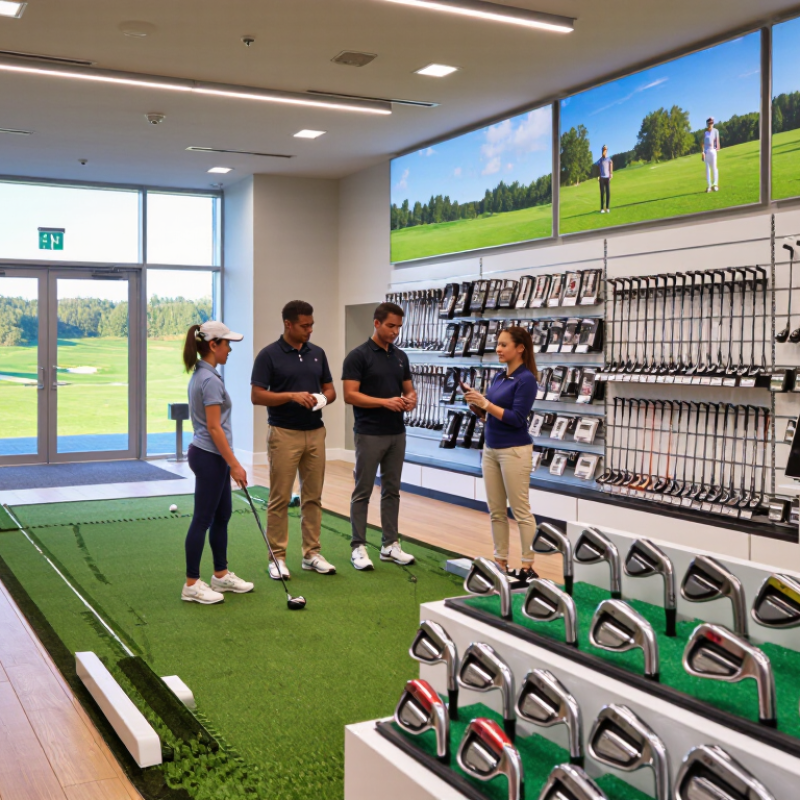
Test MOI, Forgiveness, and Gapping During a Professional Fitting

Choosing the best golf club set starts with a professional fitting, not a showroom guess. Ask the fitter to measure launch, ball speed, spin, descent angle, and carry distance. The 2023 USGA and R&A Distance Insights Report recorded elite male driving distance at nearly 300 yards. That distance trend makes precise club spacing more important, even for slower swings.

Tip: Test MOI and forgiveness with mishits. Hit five shots from the center, heel, and toe. Compare ball speed retention and dispersion, not only the longest shot. A high-MOI head may keep a poor strike playable, but it can still feel awkward or launch too high. I have seen golfers choose maximum forgiveness, then struggle with distance control. More help is not always better.

Tip: Build a real gapping chart. Record average carry, not your best result. The 2024 Arccos Distance Report shows substantial distance differences across handicap levels, so published yardages cannot replace personal testing. Check every iron, hybrid, and fairway club on a launch monitor. Look for gaps near 10 to 15 yards, then adjust loft or replace a redundant club. Do not ignore the short end. A wedge gap of five yards can create an uncomfortable half-swing. Bring your current set, use the same balls, and question results that feel too perfect.