
Custom golf clubs are built or adjusted to suit a golfer’s body, swing, and preferences. They may look much like off-the-rack clubs, but details such as shaft length, flex, grip size, clubhead design, and lie angle can differ. Small changes matter. A club that sits poorly at address, for example, may encourage awkward setup habits.
Club designer Tom Wishon has put the fitting principle this way: “There is no such thing as a standard golf club.” The idea is useful, but it should not be taken to mean that custom equipment automatically improves every player’s score. A fitting can compare measurable factors, including clubhead speed, launch, and strike location, then test suitable options. The golfer’s comfort still matters. Numbers alone can miss that.
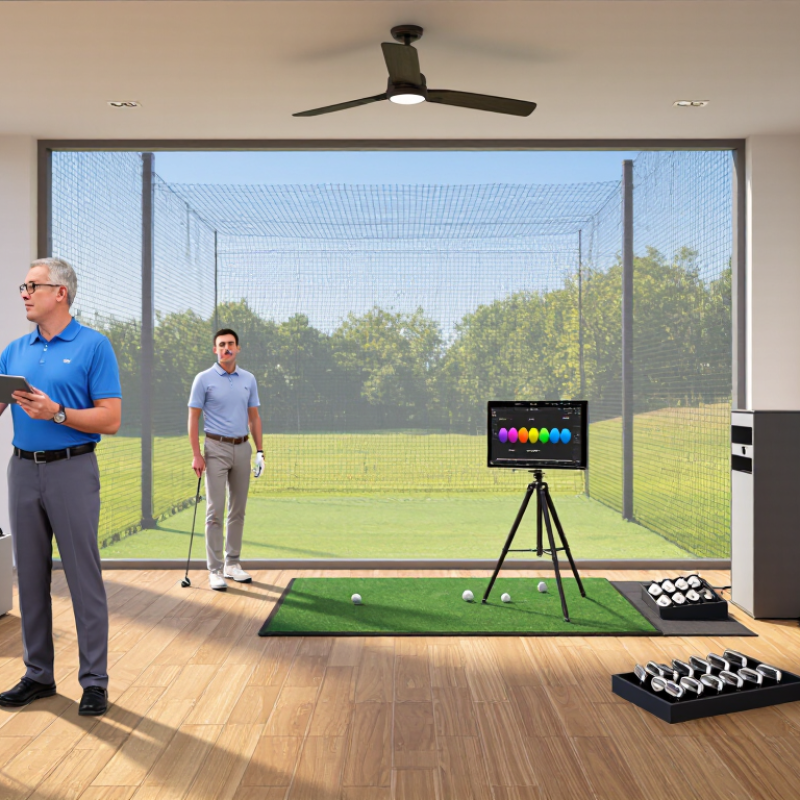
A typical session may involve hitting several shafts while a fitter checks ball flight on a launch monitor. The process can also examine how the sole meets the turf and whether the grip feels secure. These observations help explain what custom golf clubs are: equipment selected or modified around a particular player, rather than a promise of instant improvement. Results depend on the quality of the fitting, the golfer’s consistency, and realistic choices. There is room for doubt. Even a carefully fitted set cannot fix every swing flaw, and some golfers may find that a standard set already works well. A thoughtful fitting should show why a change may help—and when it may not.
Custom golf clubs are built or adjusted around a golfer’s measurements, swing, and playing needs. Instead of choosing only a standard length and flex, a fitting may assess club length, lie angle, shaft weight, grip size, and head design. The goal is a setup that feels manageable and supports more consistent contact. Fit is personal.
A fitting often includes watching ball flight and strike location, then comparing results with measured club specifications. For example, repeated heel strikes may prompt a check of lie angle or length, but one swing is not enough evidence. Comfort matters, too. A technically suitable club can still feel awkward, and a golfer’s swing may change with practice or injury. Custom fitting can help, but it cannot guarantee lower scores.
Custom golf clubs are built around a player’s measurements and swing, rather than a standard set of specifications. A fitting usually starts with questions about skill level, common misses, and playing conditions. The fitter then checks height, wrist-to-floor measurement, grip size, and current club length. These details are starting points, not answers on their own. The player hits shots while the fitter observes impact location, ball flight, launch, and spin. Feel matters. A technically tidy result can still feel awkward.
Next, the fitter tests different shaft weights, flexes, clubhead designs, and settings, changing one variable at a time where possible. A launch monitor helps compare carry distance, dispersion, ball speed, and launch angle. PGA TOUR ShotLink’s 2024 season statistics put average tour driving distance at about 300 yards; that figure is context, not a target for recreational golfers. A useful fit aims to match equipment to the player’s repeatable swing and preferred shot shape. The fitting should also include real turf when available. Mats can hide a poor strike. And numbers do not capture every preference. The process can be imperfect: fatigue, nerves, or a few unusually good swings may skew results, so a careful fitter checks patterns rather than chasing one impressive shot.
Custom golf clubs are built or adjusted around a golfer’s measurements, swing, and preferences. Their main components are the clubhead, shaft, and grip, and each can affect how the club feels and performs. A head’s loft influences launch, while its shape and weight can affect forgiveness and shot control. Small choices matter. Lie angle, the angle between the shaft and sole, may also need adjustment so the club sits properly at address.
Shaft options include different lengths, weights, materials, and flexes. Flex should not be chosen by swing speed alone; tempo and how the player loads the shaft matter too. Grip size and texture can change hand comfort and control, especially during a damp round. Club length, loft gaps, and set makeup can be tailored as well. A fitting may use measurements, ball-flight readings, and shots with different combinations. Still, numbers do not tell the whole story. A club that looks right but feels awkward may not suit its owner. Testing on grass, then making small changes, can reveal what a short fitting session misses.
| Club Component | What It Does | Common Customization Options | What to Consider |
|---|---|---|---|
| Clubhead | The part of the club that contacts the ball. Its shape, material, and design influence launch, forgiveness, feel, and shot control. | Head style; cavity-back or blade-style irons; driver head size and shape; adjustable weights; finish. | Choose a design suited to your skill level, preferred appearance, and desired balance of forgiveness and workability. |
| Loft | The angle of the clubface that helps determine the ball’s launch and trajectory. | Loft can be selected or, on some adjustable clubs, changed within the head’s available settings. | Driver lofts commonly fall around 8°–12°. Iron lofts vary by club and set design; consistent gaps between clubs help provide useful distance choices. |
| Lie Angle | The angle between the shaft and the sole when the club is positioned at address. It can affect how the clubface is delivered at impact. | Clubs may be fitted to a standard, more upright, or flatter lie angle; some iron heads can be adjusted by a qualified fitter. | Lie fitting should account for posture, swing delivery, and impact pattern. Adjustability depends on the head material and construction. |
| Shaft | Connects the grip to the clubhead and influences feel, timing, trajectory, and overall club weight. | Material, weight, length, flex, and bend profile. Common materials include steel and graphite. | Steel shafts are often selected for irons, while graphite is common in woods and is also available for irons. Either material can be used in many club types. |
| Shaft Flex | Describes how much a shaft bends during the swing and how it responds to the golfer’s motion. | Available flex categories commonly include extra stiff, stiff, regular, senior, and ladies; naming and availability vary. | Flex should be chosen using swing characteristics and fitting results, not swing speed alone. Flex labels are not standardized across all shafts. |
| Club Length | Affects setup, posture, swing arc, and the golfer’s ability to make consistent contact. | Clubs can be built longer or shorter than a standard specification, often in measured increments. | Fitting may consider height, wrist-to-floor measurement, posture, and impact location. Length changes can also influence swing weight. |
| Grip | The golfer’s point of contact with the club; grip size and texture can affect comfort and hand action. | Grip size, material, texture, shape, and installation orientation. | A grip should feel secure without requiring excessive pressure. Hand size and personal preference can help guide selection. |
| Swing Weight | A measurement of how heavy the clubhead feels when the club is swung; it is different from the club’s total weight. | Can be influenced by clubhead weight, shaft weight, club length, grip weight, and adjustable weighting. | Changes to length or component weight can alter swing weight. A consistent feel across a set may be a fitting goal. |
Custom golf clubs are built or adjusted around a player’s measurements, swing, and preferences. Common types include drivers, fairway woods, irons, wedges, and putters. A driver fitting may adjust loft, shaft length, shaft flex, or head weight. These choices can affect launch, spin, and feel at impact. The longest shot is not always the most useful one.
Custom irons can be matched to a golfer’s height, posture, and swing path. Adjusting lie angle may help the sole sit more evenly at impact, while shaft weight and flex influence timing and comfort. Wedges can be selected by loft and sole shape to suit common shots around the green. Small changes help. Putters may be fitted for length, lie, grip size, and head style, making it easier to set up consistently.
A useful fitting includes real swings, not just measurements. Bring your regular golf balls and make shots with clubs you know, so comparisons feel practical. Launch-monitor numbers can reveal patterns, but they do not capture every course condition or pressure situation. A fitting is not magic; personal feel can still disagree with tidy data. That tension is worth discussing before choosing a setup.
Who Benefits from Custom Clubs and What to Consider
Custom clubs can help golfers whose equipment does not match their swing, build, or common miss. A fitter may check club length, lie angle, shaft weight, grip size, and launch data. For example, repeated shots starting right may reflect setup, face control, or club specifications. A fitting can help separate these causes. It cannot repair every swing flaw.
Golfers with changing speed, recurring contact problems, or unusual height or hand size may benefit most. Newer players can benefit too, though their developing swings may make precise specifications less stable. The 2020 Distance Insights Report from the USGA and The R&A found average male driving distance had risen by about 1% over the preceding 15 years.
That matters: distance alone is a poor fitting target. Ask whether changes improve strike quality, dispersion, and comfort—not just one impressive shot. Bring your usual clubs and describe your typical miss. A launch monitor offers useful evidence, but it is not the whole story. I’d also question any fitting that promises dramatic gains before testing several options.
A good fit can feel less exciting at first. Consistency is the point.