

What Are the Best Discount Golf Clubs?
Finding the best discount golf clubs is not simply about spotting the lowest price. It is about matching club design, condition, and specifications to your swing. A driver with a large head may offer forgiveness, while a lightly used iron set can provide better value than inexpensive new equipment. Small details matter, too. Check the grooves, shaft labels, grips, and signs of face wear before buying.
Tom Wishon, a respected golf-club designer and club-fitting authority, has often stressed, “There is no such thing as a standard golf club.” That principle is essential when comparing discount golf clubs. A bargain can become expensive if the shaft flex feels wrong or the lie angle encourages poor contact. I have seen golfers focus on brand names and ignore the club’s actual fit. That approach deserves reconsideration.
This guide examines the features that separate worthwhile discounts from false savings. It considers new, used, clearance, and previous-generation clubs. It also explains how skill level, swing speed, playing frequency, and budget influence the decision. Not every recommendation will suit every golfer. That is the uncomfortable part.
Readers will find practical checks, realistic price expectations, and fitting advice based on established equipment principles. The goal is not to promote the cheapest set. It is to help golfers choose reliable performance without paying for features they cannot use. A smart purchase should feel dependable on the course, not merely attractive on a product page.
What Defines a High-Value Discount Golf Club?
A high-value discount golf club offers useful performance without hiding serious weaknesses. Price alone does not define value. Check the club’s condition, specifications, and expected lifespan before buying.
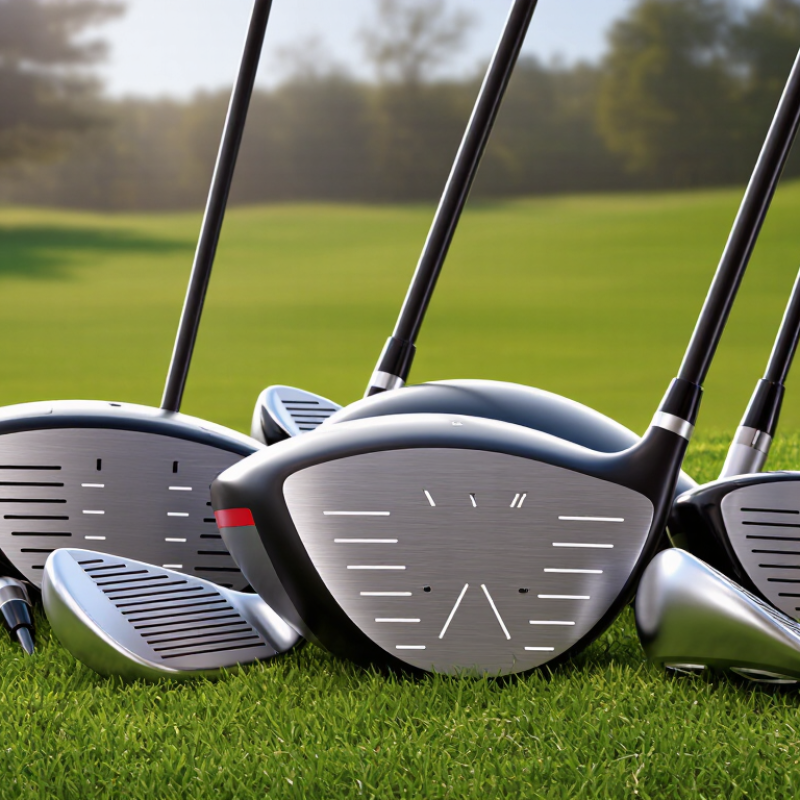
A practical inspection should start with the face. Grooves should remain visible, especially on wedges and short irons. Deep scratches near the hitting area may affect spin and consistency. Examine the shaft for dents, cracks, or unusual bends. The grip should feel firm, not hardened or slippery. Small wear is acceptable. Structural damage is not.
Specifications also deserve attention. Confirm the loft, lie angle, shaft flex, length, and clubhead design. A discounted club can perform poorly if it does not match your swing. If possible, test it on a launch monitor or compare it with a familiar club. Look for stable contact, predictable distance, and a comfortable launch. Forgiveness may matter more than maximum distance for many recreational players. A return policy adds real value, particularly when buying online. Be careful with vague descriptions and stock photographs. I have seen golfers focus on the discount and ignore unsuitable shaft weight. That mistake can make an inexpensive club costly. Even experienced players should question whether a bargain fits their current technique, not their ideal swing.
What Are the Best Discount Golf Clubs? - What Defines a High-Value Discount Golf Club?
| Evaluation Dimension | High-Value Benchmark | Why It Matters | How to Verify Before Buying |
|---|---|---|---|
| Effective Discount | A genuine reduction of approximately 20% or more from the documented regular price | A large advertised percentage is useful only when the comparison price is legitimate and current. | Compare the final selling price with recent prices from several independent retailers and include shipping and taxes. |
| Club Condition | New, lightly used, or professionally inspected; no face cracks, dents, loose heads, or bent shafts | Physical damage can change performance and may cost more to repair than the original discount saves. | Request clear photographs of the clubface, sole, crown, shaft, grip, and hosel. |
| Shaft Fit | The correct flex, weight, length, and kick profile for the player’s swing | A low price cannot compensate for a shaft that produces inconsistent contact or excessive dispersion. | Check the shaft label and compare it with a recent fitting, launch-monitor report, or qualified fitting advice. |
| Set Composition | A practical gapping sequence with no unnecessary duplicate clubs | Consistent loft spacing helps prevent distance gaps between clubs. | Review the lofts, club count, and intended distance for every club in the set. |
| Driver Specifications | A head near the legal 460 cc maximum, with adjustable loft preferred for fitting flexibility | A larger head generally offers a broader area of forgiveness, while loft adjustment can help tune launch conditions. | Confirm head volume, loft setting, face condition, and whether the adjustment tool is included. |
| Iron Design | Perimeter weighting, a cavity-back construction, and a sole suited to the player’s turf interaction | These features can make off-center strikes more playable, especially for developing golfers. | Check the cavity or head design, sole width, offset, loft progression, and individual iron condition. |
| Wedge Coverage | Loft gaps of roughly 4–6 degrees between pitching, gap, sand, and lob wedges when those clubs are carried | Reasonable loft spacing supports more predictable partial and full-shot distances. | Read the actual loft and bounce specifications rather than relying only on the club name. |
| Grip Condition | Firm, tacky grips without cracks, hardening, or visible wear | Worn grips can cause the player to hold the club too tightly and may require immediate replacement. | Inspect grip texture and estimate the replacement cost before calculating the true bargain. |
| Return Policy | A clearly stated return period with reasonable conditions for unused or lightly tested clubs | A return option reduces the risk of buying an unsuitable shaft, length, or lie angle. | Confirm the return deadline, restocking fees, shipping responsibility, and exclusions for discounted items. |
| Warranty and Authenticity | Verifiable serial information and written warranty coverage where applicable | Documentation helps protect against counterfeit products and manufacturing defects. | Ask for proof of purchase, serial details, warranty terms, and the seller’s contact information. |
| Total Cost of Ownership | Purchase price plus shipping, tax, fitting, regripping, and any required adjustments | The lowest ticket price is not always the lowest final cost. | Calculate the complete delivered and playable cost before comparing offers. |
| Overall Value Decision | A discount is high-value when the club fits the player, is in sound condition, and remains affordable after all additional costs | Performance suitability and reliability are more important than the advertised discount percentage alone. | Use the benchmarks above and prioritize fit, condition, warranty, and final cost in that order. |
Note: Discount percentages and resale prices can vary by season, condition, configuration, and region. Always compare the final delivered price and verify the exact specifications.
Related Posts
-
China Best Discount Golf Clubs Wholesale for Global Buyers?
-
2025 Top 5 Best Used Golf Clubs for Sale to Improve Your Game
-

Top 10 Places to Find Used Golf Clubs for Sale Online?
-

Top 10 Best Discount Golf Clubs for Every Golfer's Needs?
-
Top 10 Benefits of Choosing Used Golf Clubs Over New Ones for Every Golfer
-
10 Essential Tips to Score the Best Discounts on Golf Clubs Today